



Abadia de Montserrat
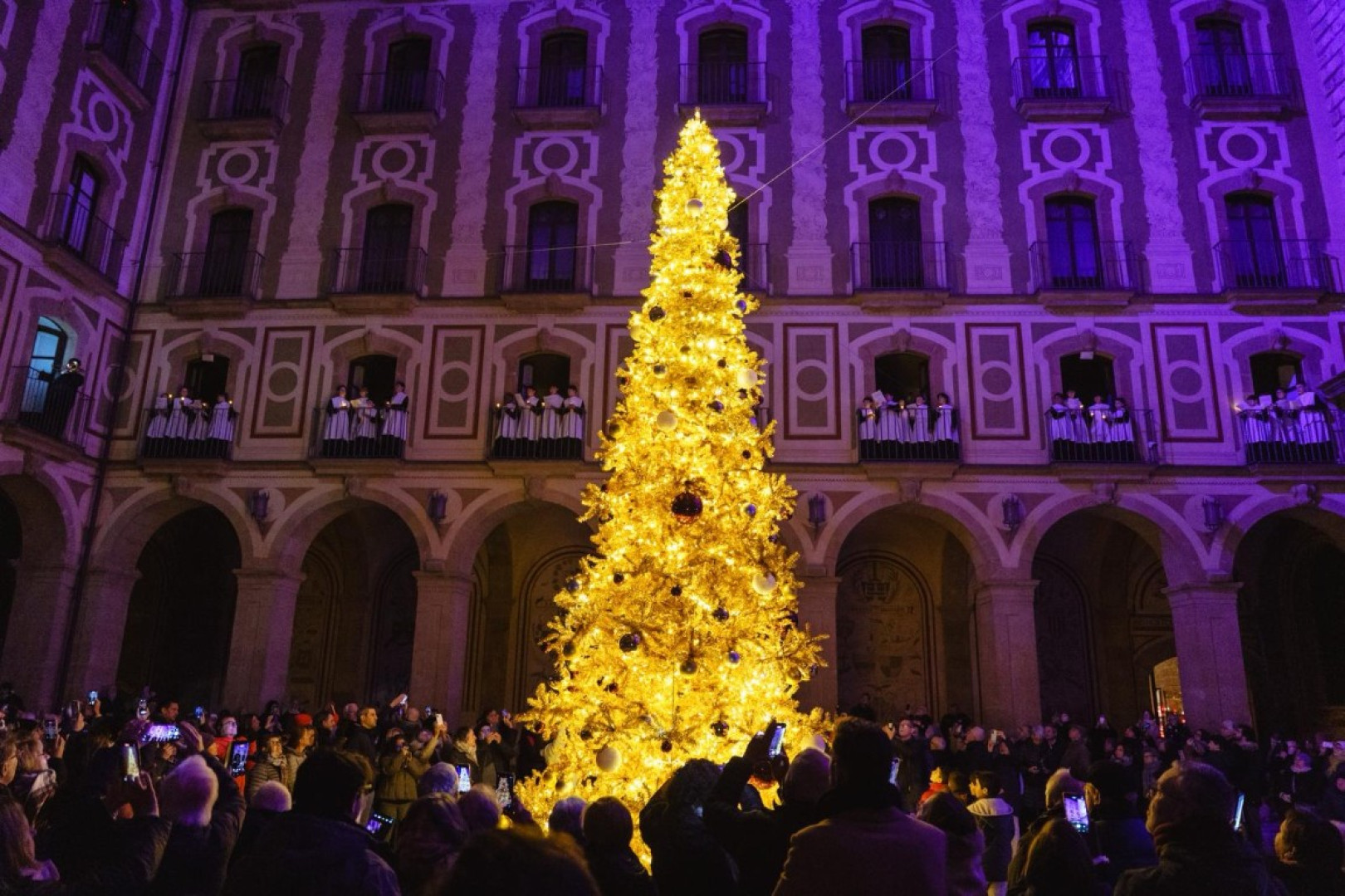
Montserrat prepares for the arrival of Advent and invites everyone to the Christmas lights switch‑on
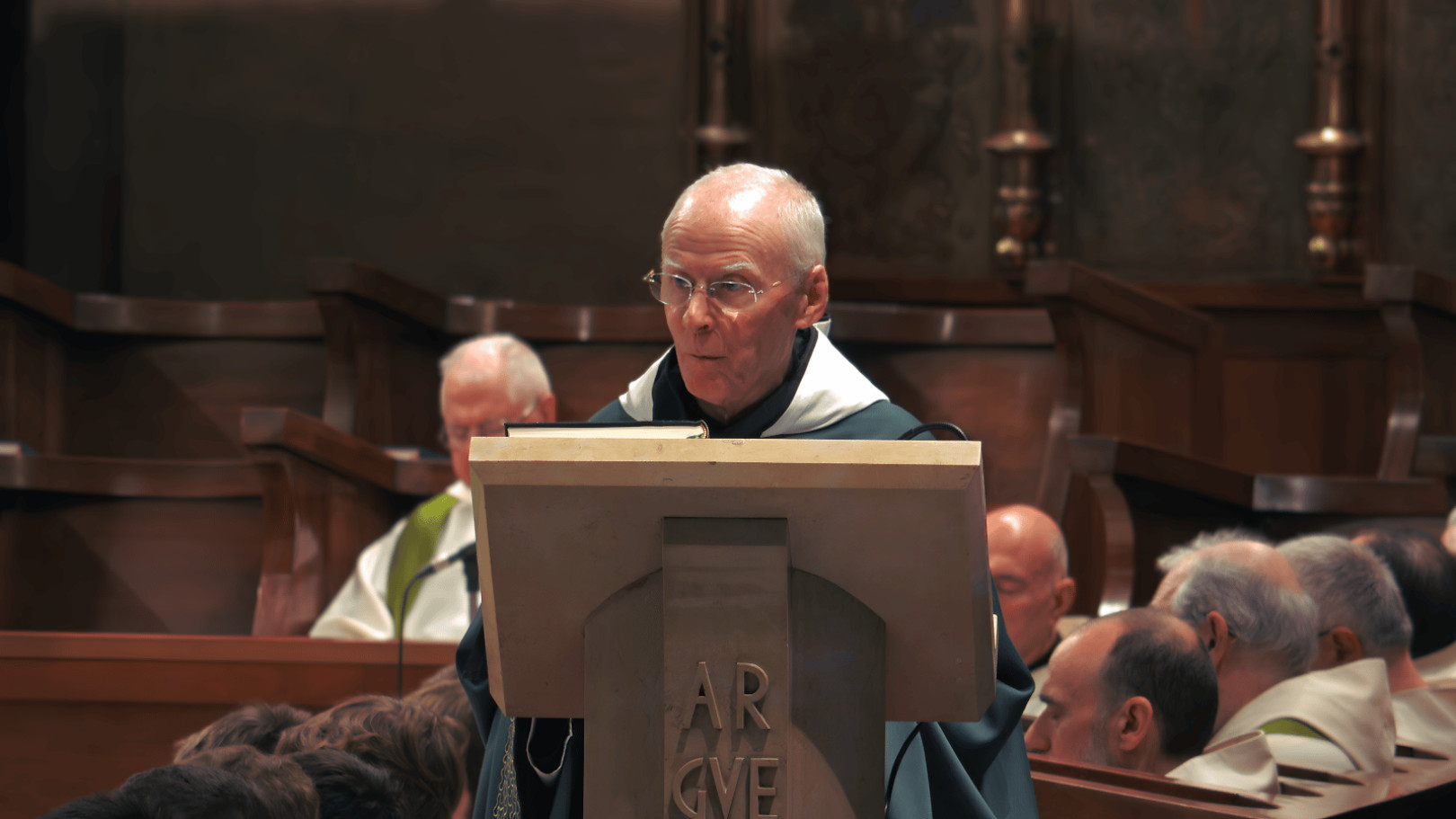
Let us remember that the Apocalypse is a message of hope addressed to churches facing, essentially, situations of persecution. Today, in this spirit of encouragement, it describes the heavenly court in a solemn, majestic manner. It tells us that by the throne there were four living creatures: “The first living creature looked like a lion, the second like a calf, the third had a face like a human being, and the fourth was like an eagle in full flight.” The Church has seen in these four living creatures a representation of the four Gospels. Further on, it tells us that “these living creatures glorified the One who sits on the throne and lives forever and ever.” Do you realize that the Gospels, as the Apocalypse describes them, proclaim the glory of God? When you read the Gospel, do you approach it with this spirit? Lord, thrice holy, may I always know how to honor You.
The Dedication of the Basilicas of Saint Peter in the Vatican and Saint Paul Outside the Walls
On this day in the year 1626, Pope Urban VIII consecrated the Basilica of Saint Peter in the Vatican, construction of which had begun nearly one hundred and twenty years earlier, replacing the one that Emperor Constantine had built in the 4th century over the place where the Apostle Peter was buried.
Today we also remember and unite, as is tradition, the figures of the two great apostles and the consecration of the current basilica of Saint Paul, which Pope Pius IX performed on December 10, 1854 —restored after the fire that devastated it in 1823—, also located at the site of the apostle's tomb on the Ostian Way.
The joint celebration of these two basilicas expresses the fraternity of Peter and Paul and the unity of the Church. Ever since the early centuries, Christians in Rome and pilgrims arriving there went to their tombs to venerate the two apostles.An ancient account from the 2nd century explains that the Roman priest Gaius indicated to Christians who wanted to visit the tombs of the apostles: "Come to the Vatican or to the Ostian Way." Thus, long before the great basilicas, those two places were already points of reference for the apostolic memory of the Church of Rome.
The Dedication of the Cathedral of Barcelona
As early as the Council of Barcelona in 599, the Holy Cross is mentioned as the title of the see. Following the Christian reconquest in 877, it sheltered a chapel to the Virgin Mary and the newly discovered relics of Saint Eulalia. The title of Saint Eulalia was then added to the ancient title. The Romanesque cathedral was consecrated on November 18, 1058. The current temple is the third cathedral, built starting in 1298 over the course of 150 years, not counting the facade from the 19th century and the crossing dome finished in 1913.
Saint Odo, Abbot of Cluny
He was born near Le Mans, France, around 878. He became a canon of the church of Saint Martin of Tours, but upon learning of the Rule of Saint Benedict, he felt drawn to monastic life and entered the Abbey of Baume. Later he moved to Cluny and, in the year 927, was elected abbot, consolidating its independence from civil and episcopal power. He established monastic observance according to the Rule of Saint Benedict and the discipline of Saint Benedict of Aniane,establishing Cluny as a center of monastic reform that would influence all of Western Europe.
An ancient biography explains that when he was still an adolescent, during a Christmas vigil, Odo began to pray spontaneously to the Virgin Mary and called her "Mother of Mercy," an invocation he would keep throughout his life.Despite his rigor as a reformist, his biographer also highlights his kindness: he liked to meet children along the way, ask them to sing, and then give them a small gift. He died on November 18, 942, after fifteen years as abbot. Although the Roman calendar celebrates him today, in Montserrat he is celebrated on May 11 along with the other saintly abbots of Cluny.
Saint Rose Philippine Duchesne, Virgin
She was born in Grenoble in 1769 into a wealthy and deeply Christian family. She decided to become a religious of the Society of the Sacred Heart, but the French Revolution prevented her from making formal vows, forcing her to flee and live in clandestine communities. Finally, she consecrated herself in 1799, dedicating herself to working on the reconstruction of communities and schools affected by the revolution.
She felt a very strong missionary vocation. Thus, after obtaining papal and Society authorization, in 1818 she moved with a few companions to Missouri, in the United States. There, amid a harsh climate marked by poverty and distance, she established a new community and various schools, pioneering female education in the American West. Among the natives she was known as "the woman who prays always." She used to say: "All for God, all for the education of children." Shortly before dying, on November 18, 1852, she said: "Lord, I want nothing more than to be at your feet and pray for all my children." She was canonized in 1898.
Calendar
Lorem ipsum dolor sit amet consectetur adipiscing elit. Quisque faucibus ex sapien vitae pellentesque sem placerat.
Schedule
Lorem ipsum dolor sit amet consectetur adipiscing elit. Quisque faucibus ex sapien vitae pellentesque sem placerat.
Offerings
Lorem ipsum dolor sit amet consectetur adipiscing elit. Quisque faucibus ex sapien vitae pellentesque sem placerat.
News
Segueix les novetats i les notícies més destacades de l’Abadia de Montserrat: comunitat, cultura, opinió, l’Escolania de Montserrat i el contingut de l’actualitat més montserratina!
Bookings
Lorem ipsum dolor sit amet consectetur adipiscing elit. Quisque faucibus ex sapien vitae pellentesque sem placerat.
The Benedictine values of Montserrat
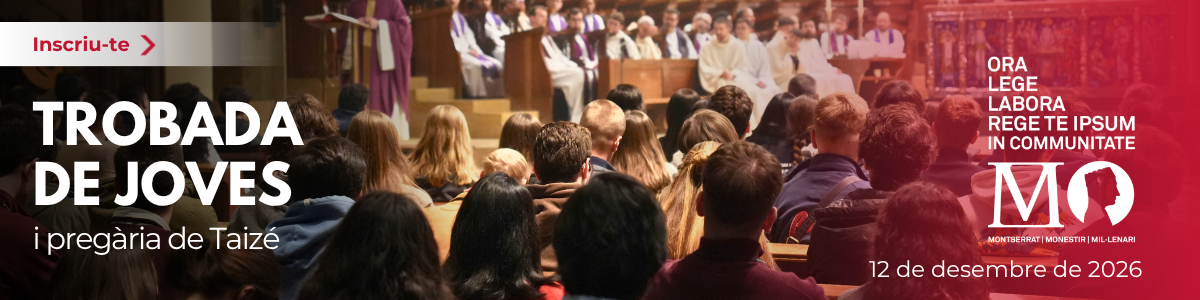
The motto Ora, Lege, Labora, Rege te ipsum, In Communitate can be read starting from its foundation to unravel the values it contains, all the way to reaching the summit, which is none other than God.
Prayer
Prayer is the center of the monks' daily routine. Through the Divine Office and the conventual Mass, the community comes together to encounter God and one another. We pray to remember that life is greater than ourselves and to find meaning in what we do.