



Homily of Fr. Manel Gasch i Hurios, Abbot of Montserrat (October 13, 2026)
Mass for the Feast of the Blessed Martyrs of Montserrat and 5th Anniversary of the Abbatial Blessing of Fr. Manel Gasch i Hurios (October 13, 2026)
13 October de 2026
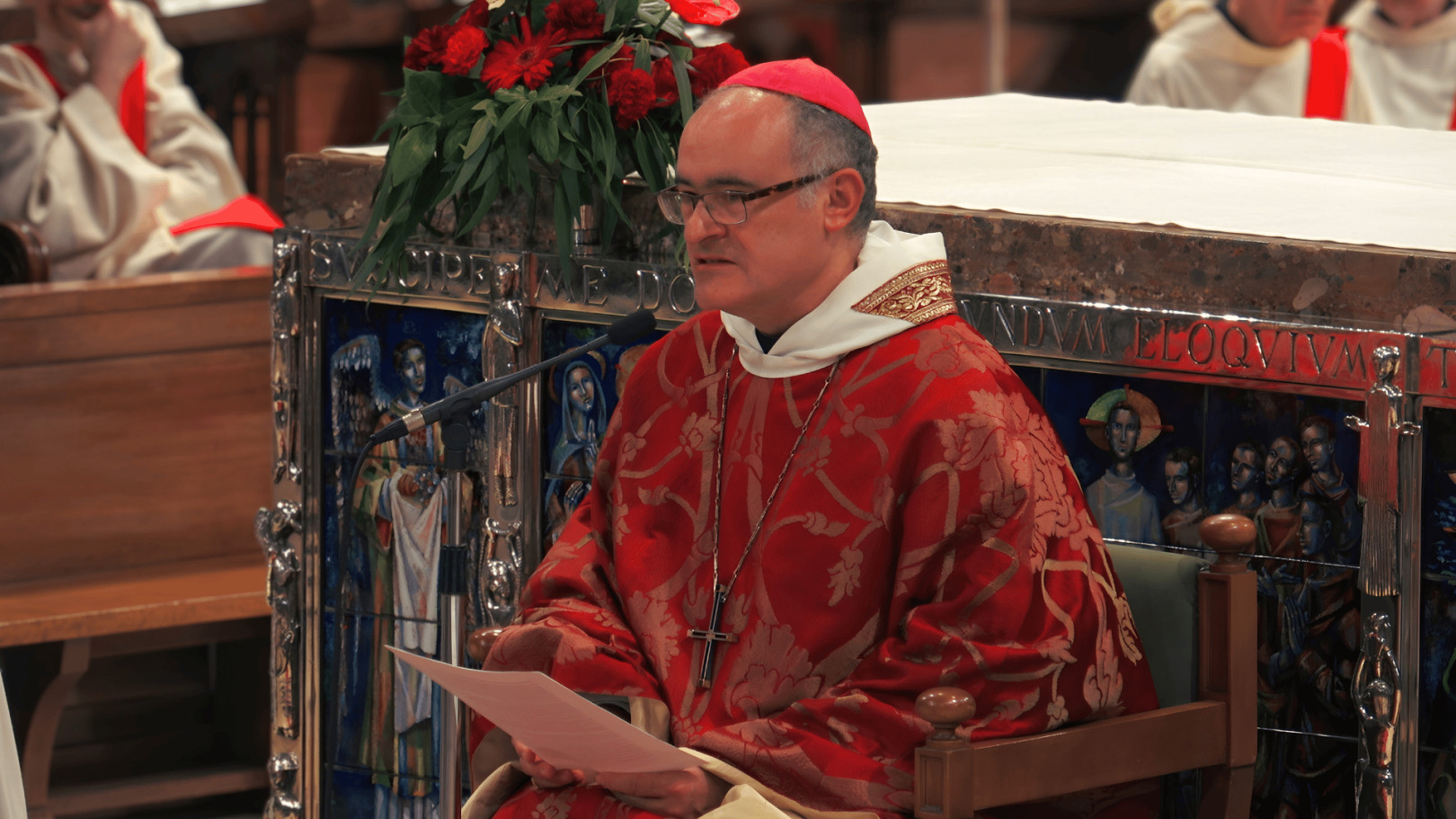
Innocently, wondering what an internet search engine might tell me about the expression "you are a martyr," and looking especially for the colloquial uses of this phrase—when we play the victim a little without the vital and theological weight of martyrdom—I found that the computer felt directly addressed by this "you are a martyr" and, through artificial intelligence—which is always the first thing that comes up now when we enter a word—told me:
"I am not a martyr, but an intelligent language model. I do not have feelings, beliefs, or a physical body, so I cannot suffer or sacrifice myself for any cause."
By telling me what it was not, it gave me the strong definition of a martyr, not the colloquial one: a person, with a body, feelings, and beliefs, who sacrifices themselves for a cause.
If we add the Christian reference, we will say that a martyr is, therefore, a witness to the truth of God; this is the cause of a martyr of Jesus Christ.
This expression presents two important challenges. The first is to name the truth of God. The second is to remain faithful to it.
And truth, what is it? It is the question thinkers have asked since time immemorial. It is so ancient that Pontius Pilate himself posed it to Jesus Christ during the Good Friday trial, as the Gospel of John relates.
We need to be somewhat clear about what we are witnessing to. And this is not so easy because the truth of God is one single reality, yet it is polyhedral; it has many facets, almost as many as the personal realities of each individual and our ways of approaching it.
You choirboys will not understand it in the exact same way as the elders of our community or many of you listening to me, but we all refer to one God, in whom we believe through faith.
Today's first and second readings wish to tell us how, for our martyr monks, this truth of God was bound to the mountain of Montserrat, and through it was signified everything that the prophet Isaiah and the Letter to the Hebrews say about Mount Zion: a place of happiness, salvation, and the security of faith because it places us at the end of our journey, in statu patriae, as Saint Augustine used to say.
The martyrs, through persecution and death, passed from this mountain to the house of God. They were witnesses to what they lived: Christian faith and the monastic vocation, which translated into a kind of passive obedience to reality and to circumstances they could never have imagined. The readings and the example of the blessed martyrs of Montserrat help us monks to reflect that the foundation of our truth is as simple as confessing the Christian faith, Benedictine life, and the vocation to "be a mountain," to be a sanctuary, to be the place where "God will meet with humanity." In this latter vocation of making Montserrat the Mountain where God encounters us, you choirboys accompany us with your service of prayer and hospitality through music.
As I have said, the second challenge of today's phrase is to be consistent, to be witnesses to what we believe. Today's Gospel makes it very clear that this truth of God is not neutral. It is not, because it reproduces the image of Jesus Christ, who was not neutral either. "The world hates us because it hates Him," it says in strong language. The truth of Jesus Christ naturally causes the reasons of the world to resist and rebel.
It is not easy to define what belongs to the world and what belongs to God. To remain free from the error of letting any ideology appropriate the figure of Jesus Christ, it may help us to observe what benefits the concrete human person, what builds a society of love that cares for the weakest, and what serves other interests. And also to possess the humility of one who does not believe themselves to be in possession of all truth, but places themselves in the role of a seeker moving forward, always allowing themselves to be questioned by the Gospel.
Our blessed martyrs, as Benedictine monks, sought God and died for the simple consistency of being who they were. They passed from the mountain of Montserrat, as from a tangible Sinai, to Mount Zion. They ended their journey in this tragic way. The lesson they give us—who surely will not be violently killed for our faith—is that of daily readiness to believe and make God present upon this mountain, so that it may also become a hope for so many pilgrims.
On one of the inscriptions in the crypt where our martyrs are buried, it is written: "Hatred has turned into love." If God had responded to the hatred of the world in kind, we would not be here. We are here because Jesus Christ is God's answer of love to humanity. And we would wish to do the same in everything. This is the martyrial consistency that the world asks of us today: to turn hatred into love.
We are sustained in this by the closing words of the reading from the book of Isaiah: "This is the Lord in whom we have set our hope. Let us rejoice and exult that He has saved us." This sentiment and this faith unite us with all those who have believed since the time of the prophet, unite us with our martyrs, and give us the perspective of history that enables us to trust in the present and in the future where it is possible to desire that the mountain of God be more real in our society and in our world, in which we may respond to hatred with love.
How far all this is from the coldness of the Google search engine that says it has no heart, no feelings! Fortunately, it is honest enough to acknowledge it. But let us be intelligent enough that if one day the search engine should say otherwise, we would not believe it. The truth of faith, the truth of God, witness, and martyrdom belong only to men and women. Let us preserve this as a dignity and an non-negotiable, irreplaceable heritage.
"I am not a martyr, but an intelligent language model. I do not have feelings, beliefs, or a physical body, so I cannot suffer or sacrifice myself for any cause."
By telling me what it was not, it gave me the strong definition of a martyr, not the colloquial one: a person, with a body, feelings, and beliefs, who sacrifices themselves for a cause.
If we add the Christian reference, we will say that a martyr is, therefore, a witness to the truth of God; this is the cause of a martyr of Jesus Christ.
This expression presents two important challenges. The first is to name the truth of God. The second is to remain faithful to it.
And truth, what is it? It is the question thinkers have asked since time immemorial. It is so ancient that Pontius Pilate himself posed it to Jesus Christ during the Good Friday trial, as the Gospel of John relates.
We need to be somewhat clear about what we are witnessing to. And this is not so easy because the truth of God is one single reality, yet it is polyhedral; it has many facets, almost as many as the personal realities of each individual and our ways of approaching it.
You choirboys will not understand it in the exact same way as the elders of our community or many of you listening to me, but we all refer to one God, in whom we believe through faith.
Today's first and second readings wish to tell us how, for our martyr monks, this truth of God was bound to the mountain of Montserrat, and through it was signified everything that the prophet Isaiah and the Letter to the Hebrews say about Mount Zion: a place of happiness, salvation, and the security of faith because it places us at the end of our journey, in statu patriae, as Saint Augustine used to say.
The martyrs, through persecution and death, passed from this mountain to the house of God. They were witnesses to what they lived: Christian faith and the monastic vocation, which translated into a kind of passive obedience to reality and to circumstances they could never have imagined. The readings and the example of the blessed martyrs of Montserrat help us monks to reflect that the foundation of our truth is as simple as confessing the Christian faith, Benedictine life, and the vocation to "be a mountain," to be a sanctuary, to be the place where "God will meet with humanity." In this latter vocation of making Montserrat the Mountain where God encounters us, you choirboys accompany us with your service of prayer and hospitality through music.
As I have said, the second challenge of today's phrase is to be consistent, to be witnesses to what we believe. Today's Gospel makes it very clear that this truth of God is not neutral. It is not, because it reproduces the image of Jesus Christ, who was not neutral either. "The world hates us because it hates Him," it says in strong language. The truth of Jesus Christ naturally causes the reasons of the world to resist and rebel.
It is not easy to define what belongs to the world and what belongs to God. To remain free from the error of letting any ideology appropriate the figure of Jesus Christ, it may help us to observe what benefits the concrete human person, what builds a society of love that cares for the weakest, and what serves other interests. And also to possess the humility of one who does not believe themselves to be in possession of all truth, but places themselves in the role of a seeker moving forward, always allowing themselves to be questioned by the Gospel.
Our blessed martyrs, as Benedictine monks, sought God and died for the simple consistency of being who they were. They passed from the mountain of Montserrat, as from a tangible Sinai, to Mount Zion. They ended their journey in this tragic way. The lesson they give us—who surely will not be violently killed for our faith—is that of daily readiness to believe and make God present upon this mountain, so that it may also become a hope for so many pilgrims.
On one of the inscriptions in the crypt where our martyrs are buried, it is written: "Hatred has turned into love." If God had responded to the hatred of the world in kind, we would not be here. We are here because Jesus Christ is God's answer of love to humanity. And we would wish to do the same in everything. This is the martyrial consistency that the world asks of us today: to turn hatred into love.
We are sustained in this by the closing words of the reading from the book of Isaiah: "This is the Lord in whom we have set our hope. Let us rejoice and exult that He has saved us." This sentiment and this faith unite us with all those who have believed since the time of the prophet, unite us with our martyrs, and give us the perspective of history that enables us to trust in the present and in the future where it is possible to desire that the mountain of God be more real in our society and in our world, in which we may respond to hatred with love.
How far all this is from the coldness of the Google search engine that says it has no heart, no feelings! Fortunately, it is honest enough to acknowledge it. But let us be intelligent enough that if one day the search engine should say otherwise, we would not believe it. The truth of faith, the truth of God, witness, and martyrdom belong only to men and women. Let us preserve this as a dignity and an non-negotiable, irreplaceable heritage.
Tags
General Now on home page
14 october de 2026
16 july de 2026
El més llegit