



The Museu de Montserrat exhibits a Kandinsky for the first time
The exhibition is the result of an exchange with the Museo Nacional Thyssen-Bornemisza in Madrid.
Abadía de Montserrat - EN
8 October de 2026
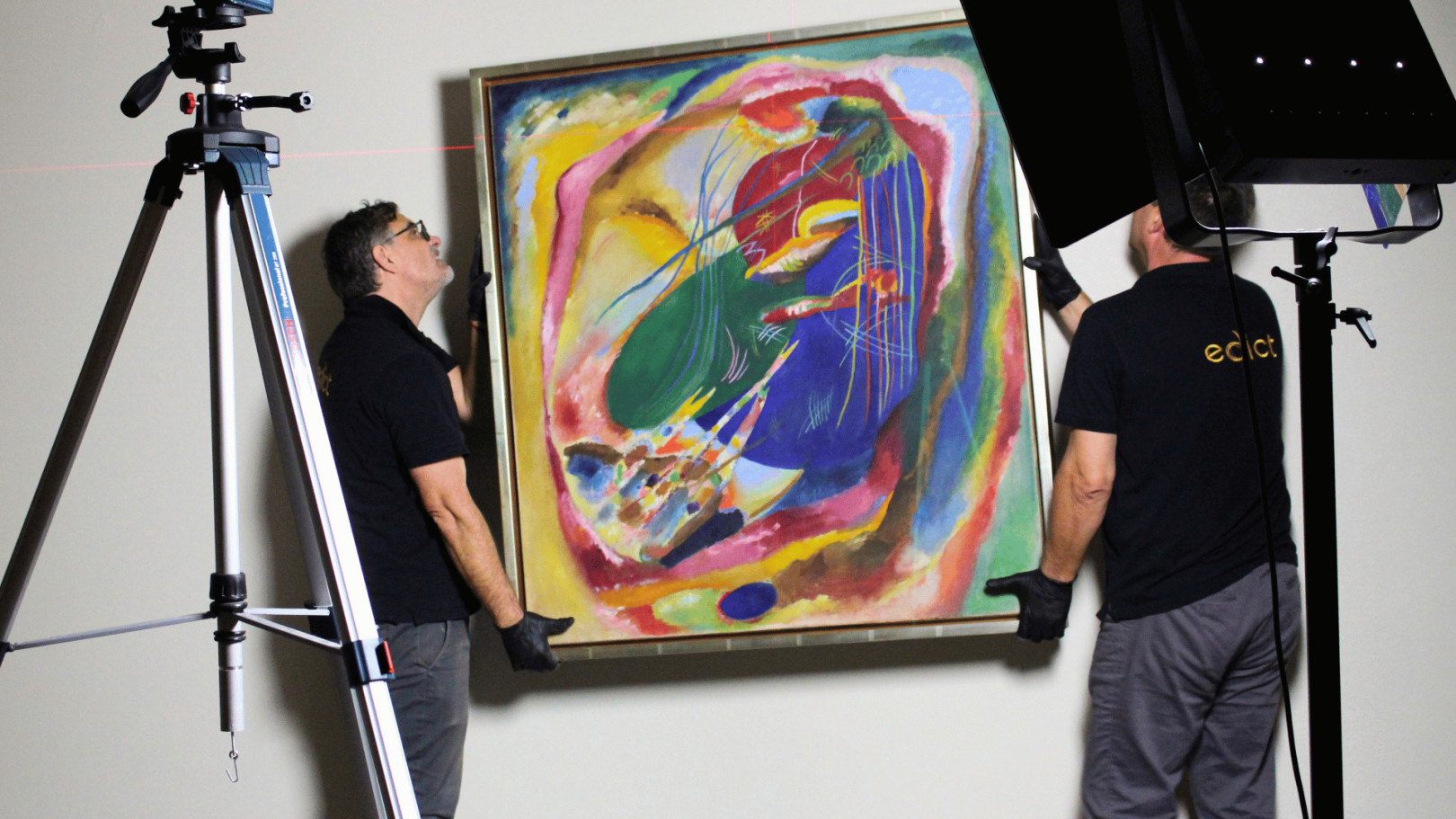
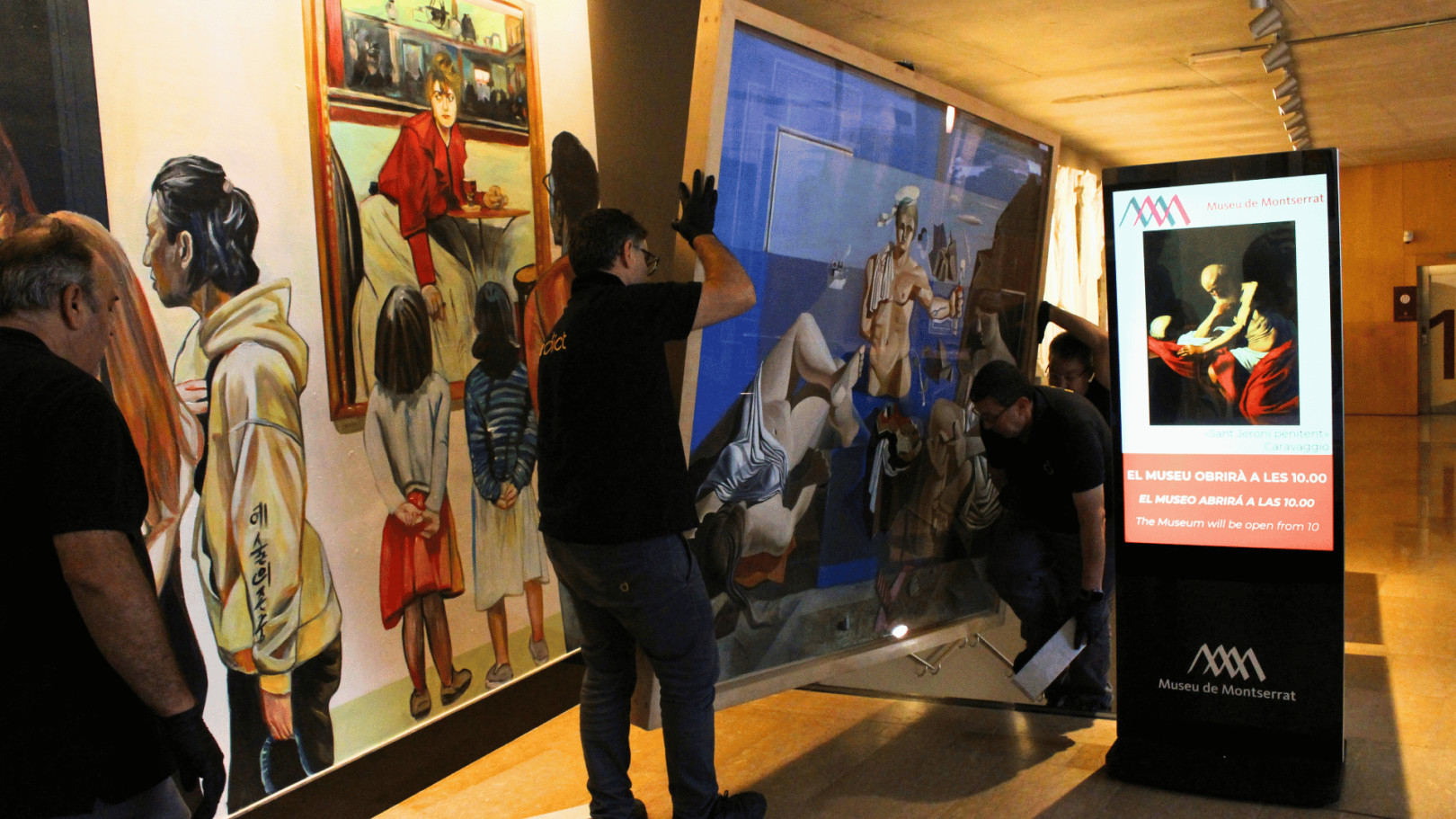
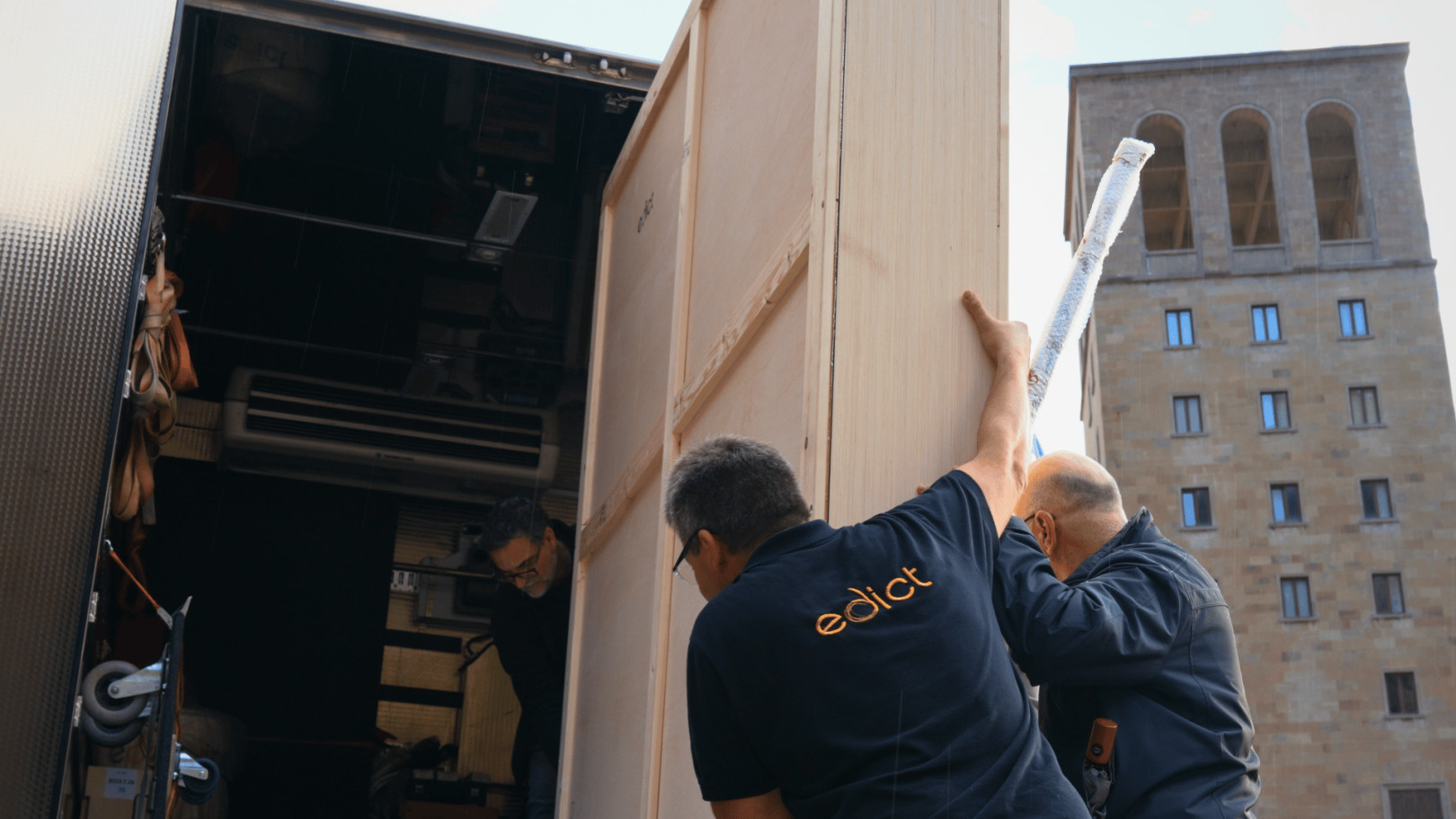
Thursday, October 8, 2026. – The oil on canvas Picture with Three Spots, No. 196 (1914) is the work by painter Wassily Kandinsky (Moscow, 1866 – Neuilly-sur-Seine, 1944) that the Museu de Montserrat will exhibit for three months, as the result of an exchange with the Museo Nacional Thyssen-Bornemisza in Madrid. During the same period, the Museum of Montserrat has provided them with a temporary loan of Salvador Dalí's Composition with Three Figures. Neo-Cubist Academy (1926), which from October 20 to January 24, 2027, will be part of the exhibition El universo freudiano de Dalí in Madrid.
Kandinsky is one of the decisive figures of 20th-century art. Initially trained in law and economics, he moved to Munich in 1896 to devote himself to painting. There he came into contact with avant-garde movements and was one of the co-founders of Der Blaue Reiter ("The Blue Rider"), a group advocating a profound renewal of art based on color, music, intuition, and spirituality.
Picture with Three Spots, No. 196 is the artist's first work ever exhibited at the Museum of Montserrat, a key piece on the path toward abstraction painted in 1914, shortly before the outbreak of World War I. It is a work situated at a transitional threshold: it still retains some echoes of the visible world, yet already fully enters abstract language. Its shapes, lines, and colors do not describe a concrete scene, but create a space of visual rhythms, tensions, and correspondences.
At the center of the composition, three large oval spots—blue, green, and red—stand out, surrounded by floating forms and moving strokes. These three presences visually organize the work and evoke the symbolic weight of the number three, which Kandinsky associated with a spiritual dimension.
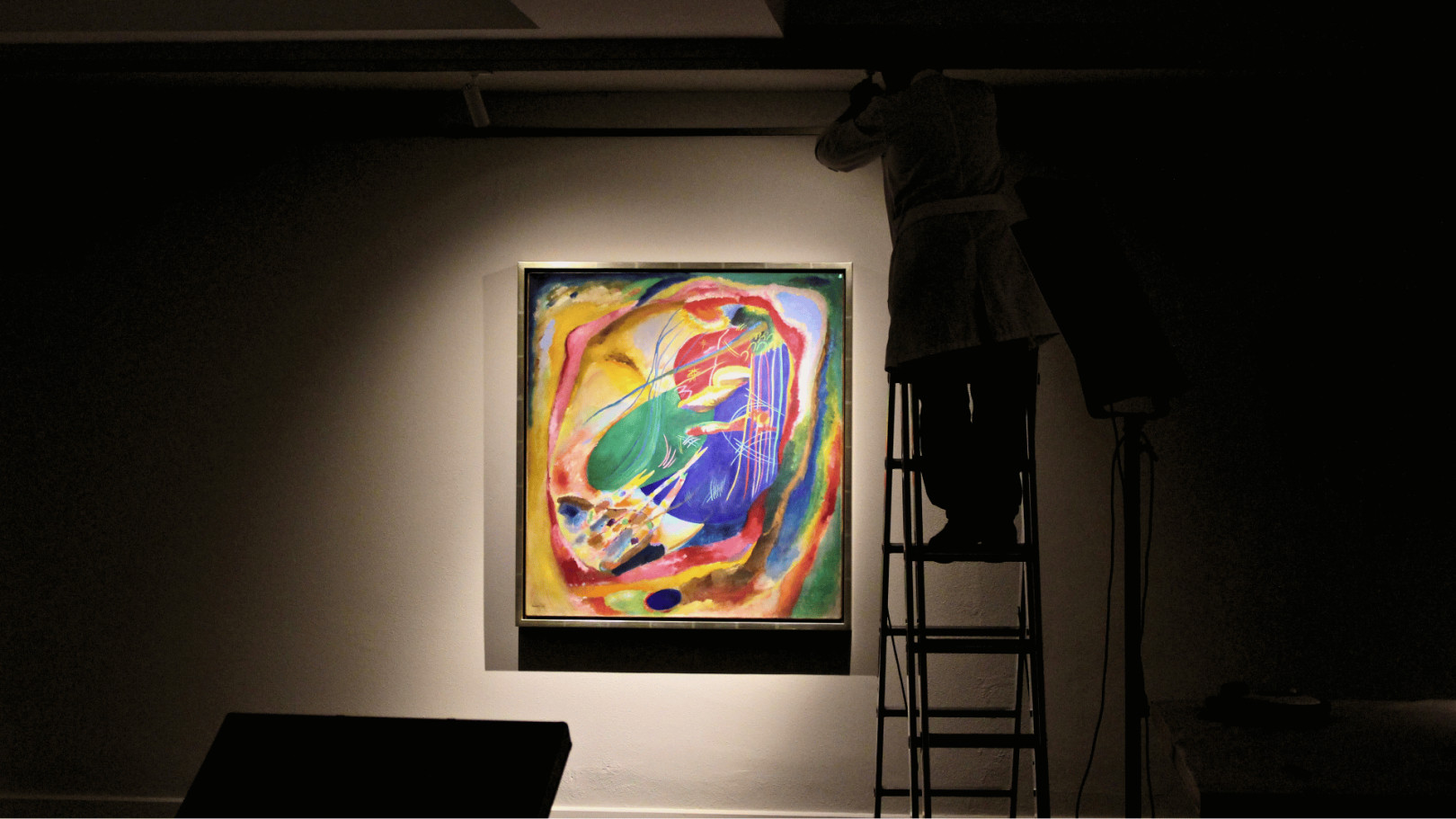
From the context of Montserrat, this structure also suggests a reading with Christian resonance. The work does not depict any religious scene or dogma, but the number three—so meaningful in the Christian tradition—allows it to be interpreted through ideas of unity, fullness, and mystery. For Kandinsky, abstraction was not an escape from the world, but a way to express inner realities that could not be represented in a figurative manner.
Collaboration with other museums
The Museu de Montserrat maintains relationships with various leading museum institutions, such as the Museo Nacional Thyssen-Bornemisza, particularly in terms of loans and professional collaboration. In this case, however, the museum celebrates that "the collaboration is especially meaningful because it allows the public at Montserrat to view an exceptional work by Kandinsky, one of the great pioneers of European abstraction, while a key work from our collection participates in an exhibition in Madrid."
They add that "exchanges of this kind are uncommon, given that we are dealing with works of great significance in art history." Furthermore, "it should be noted that—as far as we know—no museum in Catalonia holds any work by Kandinsky in its collection." In this regard, the museum hopes "to repeat such exchanges in the future with other museums requesting loans of significant works from our collection."
Wassily Kandinsky's artwork can be seen along the tour of the Museum of Montserrat, in dialogue with the permanent collection, from October 8, 2026, through January 2027.
Kandinsky is one of the decisive figures of 20th-century art. Initially trained in law and economics, he moved to Munich in 1896 to devote himself to painting. There he came into contact with avant-garde movements and was one of the co-founders of Der Blaue Reiter ("The Blue Rider"), a group advocating a profound renewal of art based on color, music, intuition, and spirituality.
Picture with Three Spots, No. 196 is the artist's first work ever exhibited at the Museum of Montserrat, a key piece on the path toward abstraction painted in 1914, shortly before the outbreak of World War I. It is a work situated at a transitional threshold: it still retains some echoes of the visible world, yet already fully enters abstract language. Its shapes, lines, and colors do not describe a concrete scene, but create a space of visual rhythms, tensions, and correspondences.
At the center of the composition, three large oval spots—blue, green, and red—stand out, surrounded by floating forms and moving strokes. These three presences visually organize the work and evoke the symbolic weight of the number three, which Kandinsky associated with a spiritual dimension.
From the context of Montserrat, this structure also suggests a reading with Christian resonance. The work does not depict any religious scene or dogma, but the number three—so meaningful in the Christian tradition—allows it to be interpreted through ideas of unity, fullness, and mystery. For Kandinsky, abstraction was not an escape from the world, but a way to express inner realities that could not be represented in a figurative manner.
Collaboration with other museums
The Museu de Montserrat maintains relationships with various leading museum institutions, such as the Museo Nacional Thyssen-Bornemisza, particularly in terms of loans and professional collaboration. In this case, however, the museum celebrates that "the collaboration is especially meaningful because it allows the public at Montserrat to view an exceptional work by Kandinsky, one of the great pioneers of European abstraction, while a key work from our collection participates in an exhibition in Madrid."
They add that "exchanges of this kind are uncommon, given that we are dealing with works of great significance in art history." Furthermore, "it should be noted that—as far as we know—no museum in Catalonia holds any work by Kandinsky in its collection." In this regard, the museum hopes "to repeat such exchanges in the future with other museums requesting loans of significant works from our collection."
Wassily Kandinsky's artwork can be seen along the tour of the Museum of Montserrat, in dialogue with the permanent collection, from October 8, 2026, through January 2027.
Now on home page
8 october de 2026
16 july de 2026
5 october de 2026
El més llegit