



Abadia de Montserrat
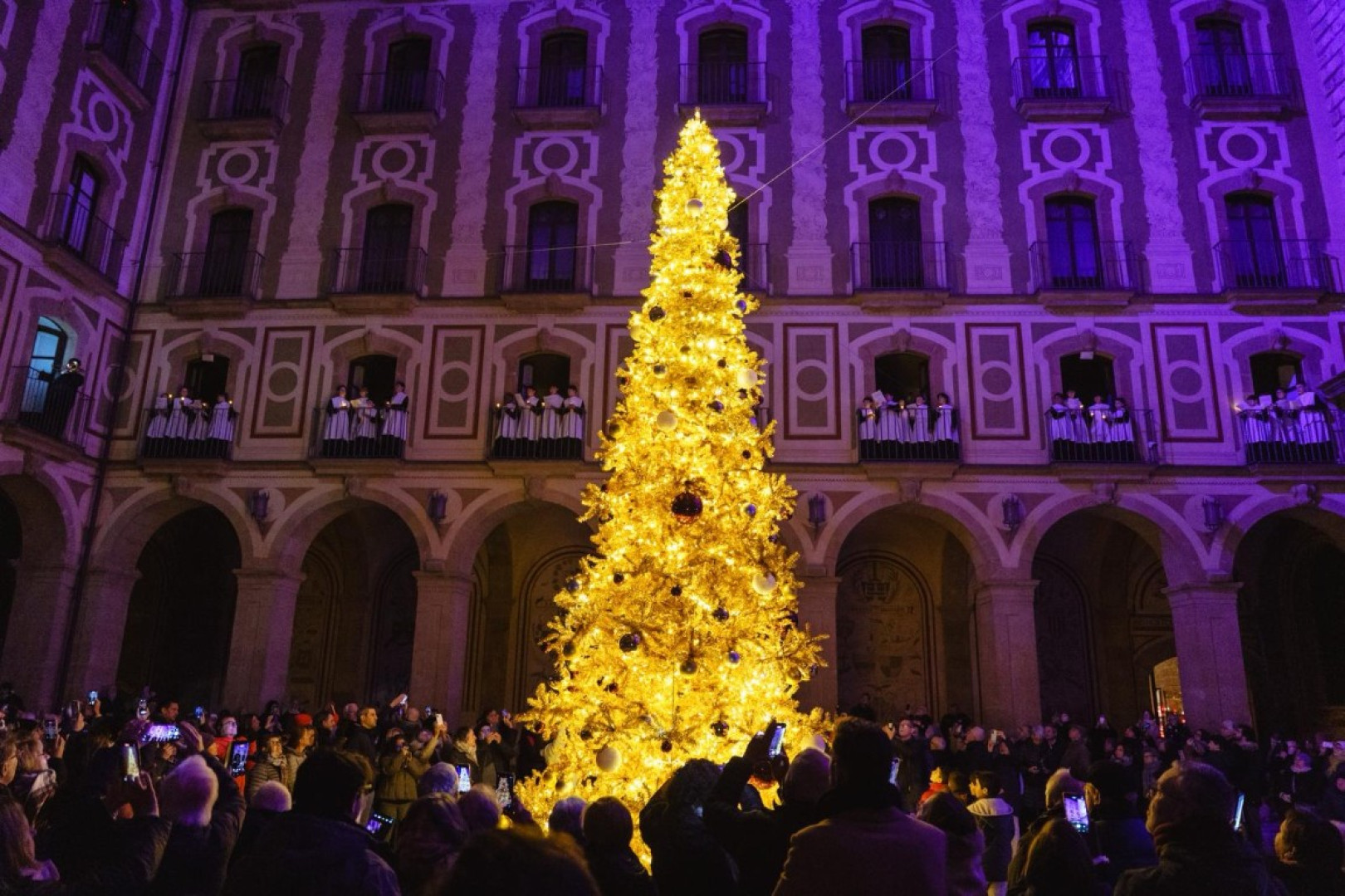
Montserrat prepares for the arrival of Advent and invites everyone to the Christmas lights switch‑on
Lord, just as the one hundred and forty-four thousand represent the twelve tribes of Israel, may I too be counted among those who, forming part of the Church, will remain faithful to you.
Saint Clement I (or Clement of Rome), pope and martyr
Bishop of Rome during the final years of the 1st century, he is traditionally considered the third successor of Saint Peter,after Saint Linus and Saint Anacletus. The most important testimony concerning his life is that of Saint Irenaeus, who was Bishop of Lyon until the year 202. The authority and prestige of this Apostolic Father, Bishop of Rome, were such that several writings were attributed to him, yet his only certain work is the Letter to the Corinthians, written probably between 96 and 98, in which he exhorted them to strengthen the bonds of peace and concord among themselves: "Have but one heart and one soul, working together in humility and patience." This letter was attributed an almost canonical character. We might say that it constitutes an early exercise of the Roman Primacy after the death of Saint Peter, enabling him to expound broadly on the identity of the Church and her mission.
Later testimonies, between the 4th and 6th centuries, attribute to Clement the title of martyr: first he was exiled by Trajan to Crimea to work in the mines, and later he was reportedly executed by having an anchor tied around his neck and being thrown into the sea. This symbol of the anchor and the sea is always associated with the saint.
Saint Columbanus, abbot
He is the foremost representative of Irish monastic culture. Born around the year 540, he was educated at the monastery of Bangor, in the northeast of the island. A scholar of the Scriptures and the Church Fathers, when he was about fifty years old, together with twelve other Celtic monks, he became a missionary across parts of central Europe (France, Germany,Switzerland, and Italy), evangelizing and founding monasteries. These monks eventually settled in northern Italy, at the monastery of Bobbio. He often clashed with others over his desire to impose Irish customs everywhere. He was a demanding man, yet full of apostolic spirit. His rule influenced religious life until it was replaced by the Rule of Saint Benedict. These monks introduced the penitential practice of individual confession to Europe. He rested in the peace of Christ in the year 615.
Saint Lucretia of Rome, virgin and martyr
A Christian virgin who lived in Rome during the persecutions against Christians in the late 3rd or early 4th century.Tradition states that she refused to renounce the Christian faith and was martyred for it.
Lucretia is venerated as a virgin and martyr of Rome, traditionally linked to the persecutions against Christians of the late 3rd or early 4th century. Information about her life is very scarce, yet tradition presents her as a young Christian woman who preferred to remain faithful to the faith rather than renounce Christ.
Calendar
Lorem ipsum dolor sit amet consectetur adipiscing elit. Quisque faucibus ex sapien vitae pellentesque sem placerat.
Schedule
Lorem ipsum dolor sit amet consectetur adipiscing elit. Quisque faucibus ex sapien vitae pellentesque sem placerat.
Offerings
Lorem ipsum dolor sit amet consectetur adipiscing elit. Quisque faucibus ex sapien vitae pellentesque sem placerat.
News
Segueix les novetats i les notícies més destacades de l’Abadia de Montserrat: comunitat, cultura, opinió, l’Escolania de Montserrat i el contingut de l’actualitat més montserratina!
Bookings
Lorem ipsum dolor sit amet consectetur adipiscing elit. Quisque faucibus ex sapien vitae pellentesque sem placerat.
The Benedictine values of Montserrat
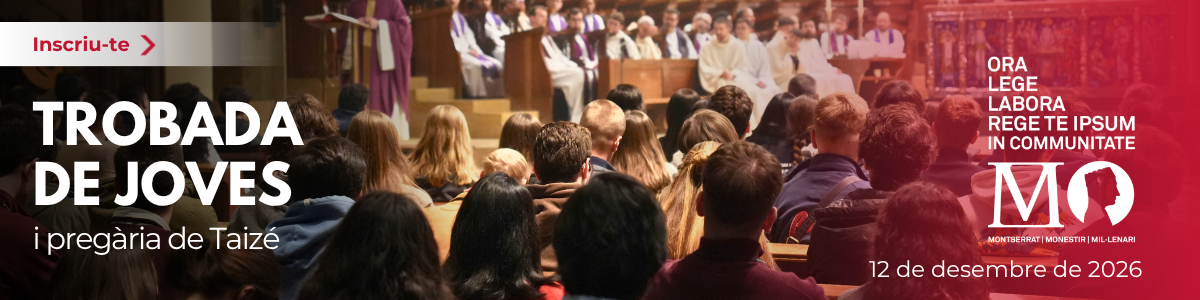
The motto Ora, Lege, Labora, Rege te ipsum, In Communitate can be read starting from its foundation to unravel the values it contains, all the way to reaching the summit, which is none other than God.
Prayer
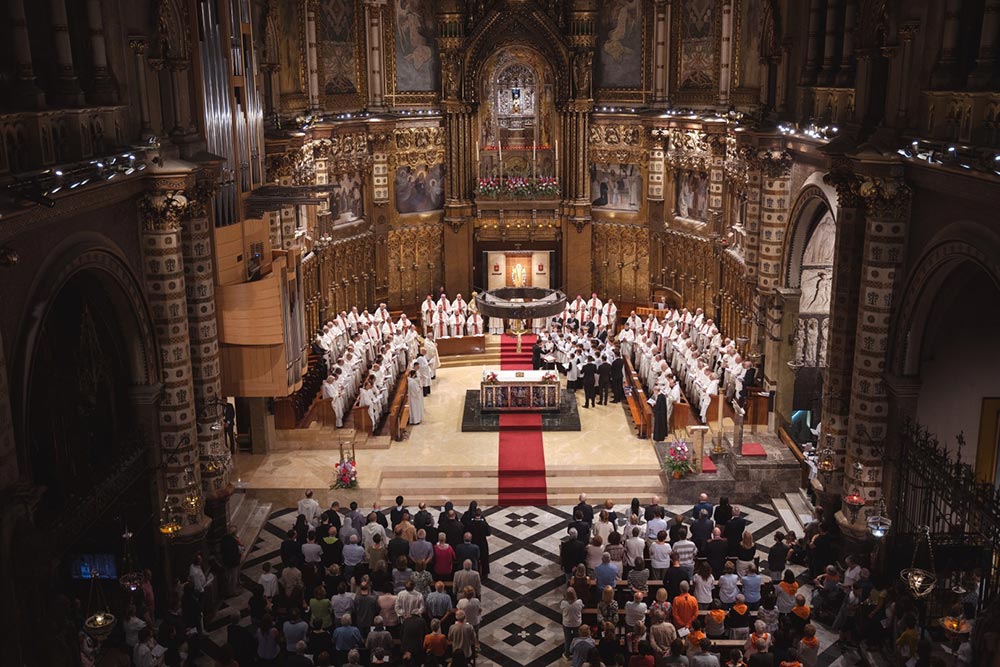
Prayer is the center of the monks' daily routine. Through the Divine Office and the conventual Mass, the community comes together to encounter God and one another. We pray to remember that life is greater than ourselves and to find meaning in what we do.