




16 November 2026
Saint Margaret of Scotland and Saint Gertrude
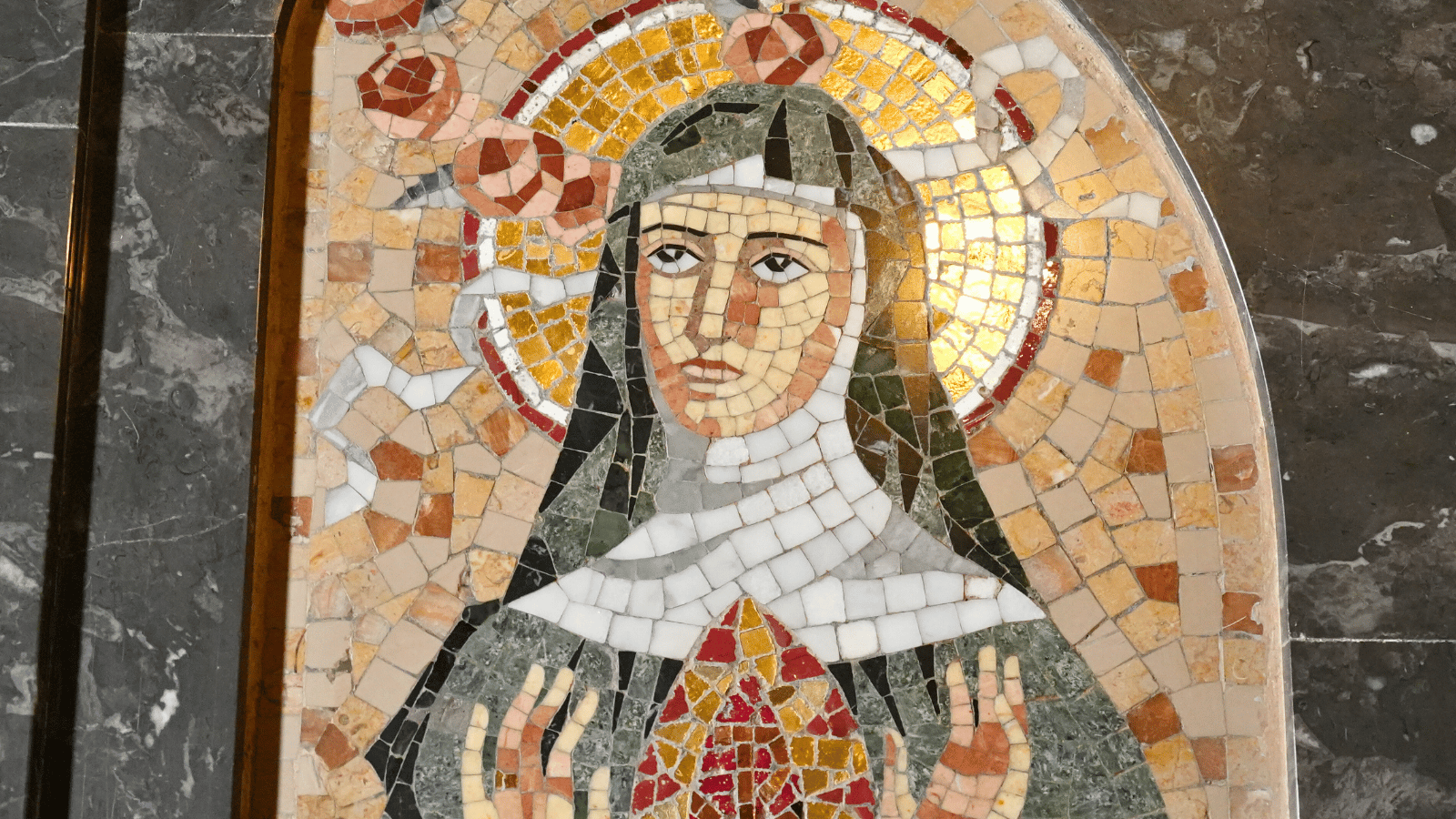
Today, November 16, we celebrate the feast day of: Saint Margaret of Scotland, queen; and Saint Gertrude, virgin.
Saint Margaret of Scotland, Queen
Of English origin, she was born in Hungary around 1046, where her parents were in exile. Following the Norman conquest of England, her family took refuge in Scotland, where in 1070 she married King Malcolm III. They had eight children, including three future kings. She exerted a notable cultural and religious influence; through her culture, her political sense, and above all her charity, she contributed greatly to the religious revitalization of her people. The doors of her castle in Edinburgh opened to welcome, help, and assist the poor and the sick, for whom she had hospices and shelters built. She ordered the Lenten fast, recommended frequent confession and Sunday Mass, spread religious education, and promoted the construction of churches and monasteries.
In 1093, upon learning of the death of her husband and her son, she said: "Almighty God, I thank You for sending me such a great affliction in the final moments of my life. I hope that, through Your mercy, it will serve to purify me of my sins." She died three days later, on November 16. She was canonized in 1250 and is the patron saint of Scotland.
Saint Gertrude, Virgin
Born around 1256 in Eisleben, Saxony, she was entrusted at the age of five to the monastery of Helfta in the Germanic region of Saxony. Although they were officially Benedictine nuns, they sympathized with Cistercian ideals, forming a bridge between the two traditions. At Helfta, she achieved a solid humanistic and theological formation, and artistically excelled in musical mastery and the illumination of manuscripts.
She had the ability to harmonize her devotion to the Sacred Heart of Jesus with a solid liturgical life: "You desired to admit me into the delightful intimacy of Your friendship, placing Your divine Heart at my disposal, so that I might find all my happiness in it." For her, every moment of the liturgy, the Mass, and the Divine Office was a direct communication with Jesus, not as a ritual repetition, but as a present mystical reality: "when we sang the Divine Office, I saw the Lord Jesus rising in the midst of the choir, clothed in a resplendent tunic, and from every word that left our lips He made a jewel to crown His head."
She wrote several works, among which The Herald of Divine Love stands out, gathering her mystical experiences. She fell asleep in the Lord around 1302 with great serenity, surrounded by the nuns: "O Jesus of the twilight, grant that I may sleep a tranquil sleep and taste the rest You have prepared for those who love You." Her cult was approved in 1738.
Array
(
    [ID] => 75
    [actiu] => 1
    [fecha] => 1794783600
    [cicle] => -
    [titol] => Saint Margaret of Scotland and Saint Gertrude
    [entradeta] =>
    [cos] => Today, November 16, we celebrate the feast day of: Saint Margaret of Scotland, queen; and Saint Gertrude, virgin.


Saint Margaret of Scotland, Queen


Of English origin, she was born in Hungary around 1046, where her parents were in exile. Following the Norman conquest of England, her family took refuge in Scotland, where in 1070 she married King Malcolm III. They had eight children, including three future kings. She exerted a notable cultural and religious influence; through her culture, her political sense, and above all her charity, she contributed greatly to the religious revitalization of her people. The doors of her castle in Edinburgh opened to welcome, help, and assist the poor and the sick, for whom she had hospices and shelters built. She ordered the Lenten fast, recommended frequent confession and Sunday Mass, spread religious education, and promoted the construction of churches and monasteries.


In 1093, upon learning of the death of her husband and her son, she said: "Almighty God, I thank You for sending me such a great affliction in the final moments of my life. I hope that, through Your mercy, it will serve to purify me of my sins." She died three days later, on November 16. She was canonized in 1250 and is the patron saint of Scotland.


Saint Gertrude, Virgin


Born around 1256 in Eisleben, Saxony, she was entrusted at the age of five to the monastery of Helfta in the Germanic region of Saxony. Although they were officially Benedictine nuns, they sympathized with Cistercian ideals, forming a bridge between the two traditions. At Helfta, she achieved a solid humanistic and theological formation, and artistically excelled in musical mastery and the illumination of manuscripts.


She had the ability to harmonize her devotion to the Sacred Heart of Jesus with a solid liturgical life: "You desired to admit me into the delightful intimacy of Your friendship, placing Your divine Heart at my disposal, so that I might find all my happiness in it." For her, every moment of the liturgy, the Mass, and the Divine Office was a direct communication with Jesus, not as a ritual repetition, but as a present mystical reality: "when we sang the Divine Office, I saw the Lord Jesus rising in the midst of the choir, clothed in a resplendent tunic, and from every word that left our lips He made a jewel to crown His head."


She wrote several works, among which The Herald of Divine Love stands out, gathering her mystical experiences. She fell asleep in the Lord around 1302 with great serenity, surrounded by the nuns: "O Jesus of the twilight, grant that I may sleep a tranquil sleep and taste the rest You have prepared for those who love You." Her cult was approved in 1738.
    [imatge] => https://montserrat.sobrevia.net/gestiobeta/arxius/montserrat/santoral/abadiaeng_75.jpg
)