




9 November 2026
Dedication of the Lateran Basilica and Our Lady of the Almudena
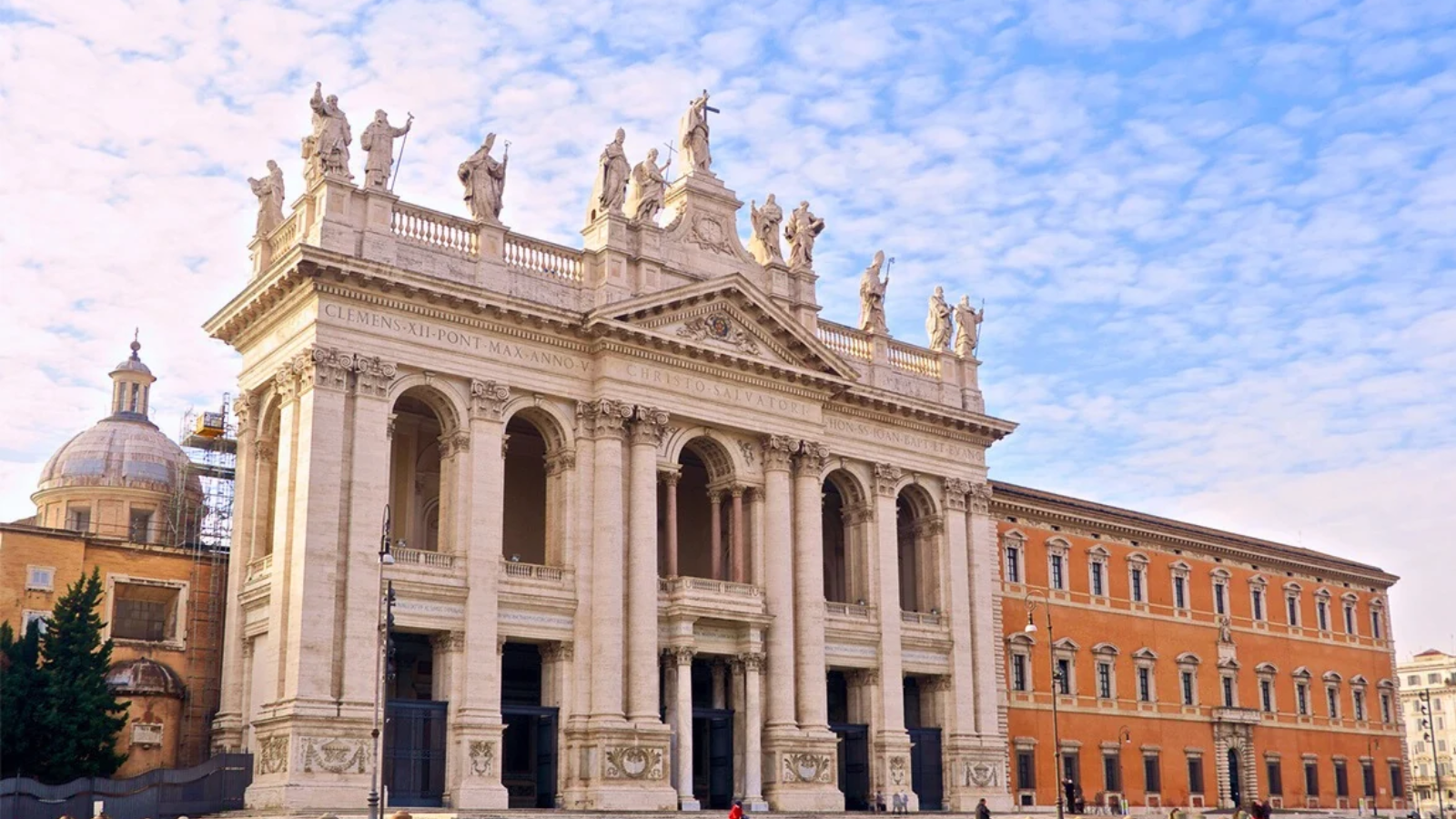
Today, November 9, we celebrate the feast of: the Dedication of the Lateran Basilica; and Our Lady of the Almudena.
The Dedication of the Lateran Basilica
Today we celebrate the anniversary of the dedication to God of the Roman basilica of Saint John Lateran, the cathedral of the Diocese of Rome and the seat of the Bishops of Rome. It was built on the site of the ancient palace of the Laterani, part of the dowry of Constantine's wife. Upon the emperor's initiative, a grand basilica was constructed and subsequently granted to the Bishop of Rome. The chosen location was then slightly removed from the city center to avoid offending the sensibilities of the population, which was still predominantly pagan. The original dedication took place around the year 324 to the Most Holy Savior. Later, the titles of Saint John the Baptist and Saint John the Evangelist were added. The Roman cathedral is considered the "mother and head of all churches of Rome and of the world." The feast of its dedication, initially celebrated only in Rome, was extended from the 16th century onward to all Churches of the Roman Rite. Therefore, this celebration does not merely commemorate a building, but expresses the communion of all Christian communities with the Church of Rome and with the successor of Saint Peter. The basilica is also a sign of the living Church, formed not only of stone temples, but of all those who, as "living stones," constitute the people of God.
Our Lady of the Almudena
Her devotion in Madrid is documented at least since the 14th century. According to an ancient tradition, when the city was occupied by Muslims, Christians hid an image of the Virgin Mary in one of the wall's turrets to prevent it from being profaned. Following the conquest of Madrid in 1085, the image reportedly reappeared at the spot where a section of the wall had collapsed, with the two candles accompanying it still lit. The name Almudena has traditionally been linked to the Arabic al-mudayna, meaning "citadel," referring to the location where, according to tradition, the image was hidden. Since ancient times, she became the patron saint of the city of Madrid and, since 1977, also of the archdiocese. For centuries, the image was venerated in the church—now demolished—that was built on Cuesta de la Vega street, but since 1993 it has been venerated in the cathedral that bears her name.
Array
(
    [ID] => 68
    [actiu] => 1
    [fecha] => 1794178800
    [cicle] => -
    [titol] => Dedication of the Lateran Basilica and Our Lady of the Almudena
    [entradeta] =>
    [cos] => Today, November 9, we celebrate the feast of: the Dedication of the Lateran Basilica; and Our Lady of the Almudena.


The Dedication of the Lateran Basilica


Today we celebrate the anniversary of the dedication to God of the Roman basilica of Saint John Lateran, the cathedral of the Diocese of Rome and the seat of the Bishops of Rome. It was built on the site of the ancient palace of the Laterani, part of the dowry of Constantine's wife. Upon the emperor's initiative, a grand basilica was constructed and subsequently granted to the Bishop of Rome. The chosen location was then slightly removed from the city center to avoid offending the sensibilities of the population, which was still predominantly pagan. The original dedication took place around the year 324 to the Most Holy Savior. Later, the titles of Saint John the Baptist and Saint John the Evangelist were added. The Roman cathedral is considered the "mother and head of all churches of Rome and of the world." The feast of its dedication, initially celebrated only in Rome, was extended from the 16th century onward to all Churches of the Roman Rite. Therefore, this celebration does not merely commemorate a building, but expresses the communion of all Christian communities with the Church of Rome and with the successor of Saint Peter. The basilica is also a sign of the living Church, formed not only of stone temples, but of all those who, as "living stones," constitute the people of God.


Our Lady of the Almudena


Her devotion in Madrid is documented at least since the 14th century. According to an ancient tradition, when the city was occupied by Muslims, Christians hid an image of the Virgin Mary in one of the wall's turrets to prevent it from being profaned. Following the conquest of Madrid in 1085, the image reportedly reappeared at the spot where a section of the wall had collapsed, with the two candles accompanying it still lit. The name Almudena has traditionally been linked to the Arabic al-mudayna, meaning "citadel," referring to the location where, according to tradition, the image was hidden. Since ancient times, she became the patron saint of the city of Madrid and, since 1977, also of the archdiocese. For centuries, the image was venerated in the church—now demolished—that was built on Cuesta de la Vega street, but since 1993 it has been venerated in the cathedral that bears her name.
    [imatge] => https://montserrat.sobrevia.net/gestiobeta/arxius/montserrat/santoral/abadiaeng_68.jpg
)