




4 November 2026
Saint Charles Borromeo and the martyrs Vitalis and Agricola
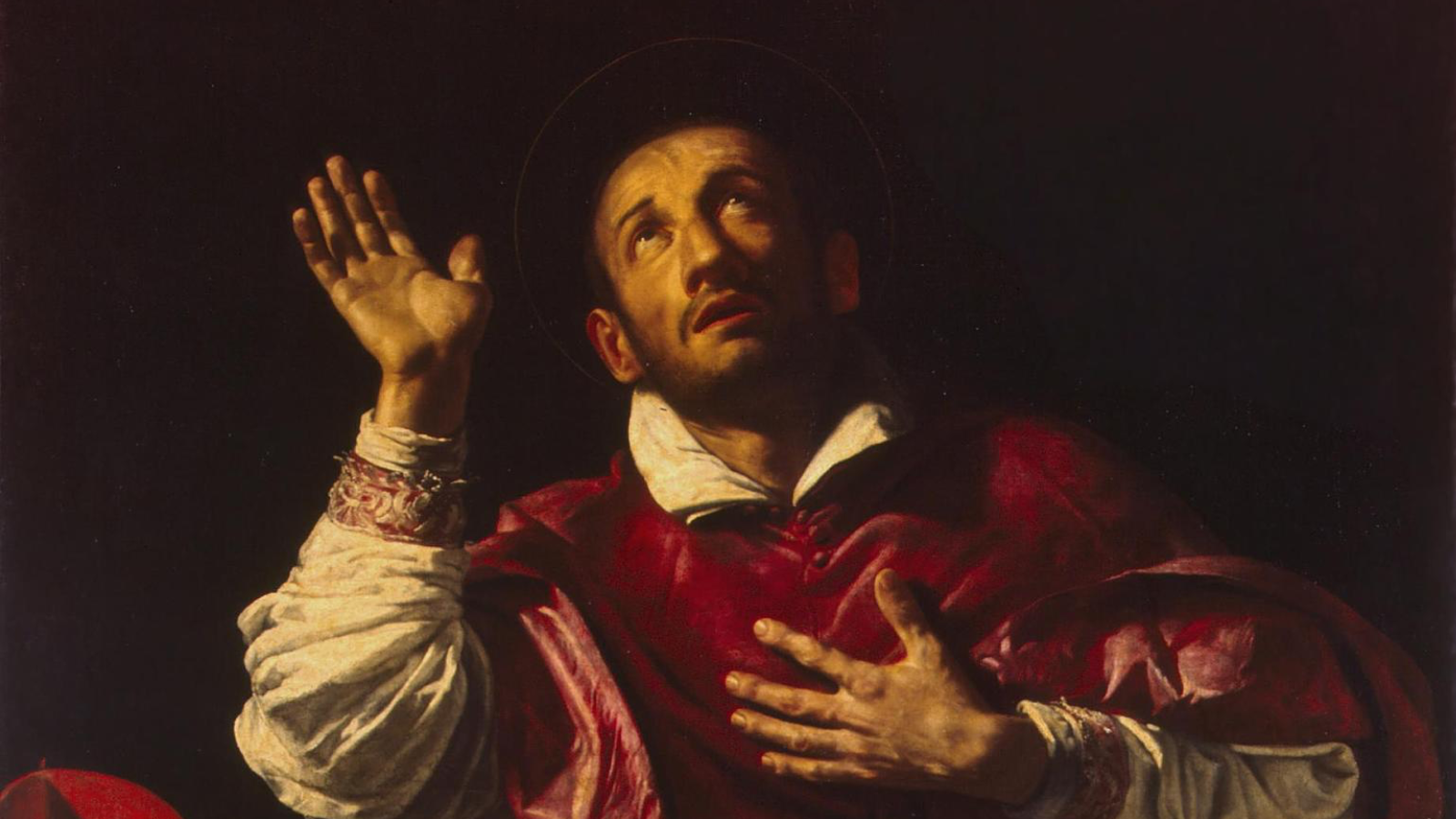
Today, November 4th, we celebrate the feast of: Saint Charles Borromeo, bishop; and the martyrs Vitalis and Agricola.
Saint Charles Borromeo, bishop
Born in Arona, Lombardy, in the year 1538 into a noble family, he was a nephew of Pope Pius IV. He was created a cardinal at just twenty-two years of age and participated actively in the resumption and conclusion of the Council of Trent. A few years later, he was appointed Archbishop of Milan, with a dispensation from residence so that he could collaborate in Rome with the Pope, serving as his secretary. The death of his brother in 1562 made him vividly aware of human misery and the true happiness of eternal glory, initiating a profound conversion and a desire to lead a serious spiritual life.
Upon the Pope's death, he moved to Milan, where he dedicated himself fully to the pastoral governance of his archdiocese and the implementation of the Council's reforms. Through his work and personal life, he became the true model of a bishop for the Catholic Counter-Reformation: "the bishop, if he lives, must live solely for God and for the salvation of his faithful"; that is, he must be holy and care for the faithful of his diocese. He advised his priests: "understand, O brothers,that nothing is so necessary to men of the Church as mental prayer, which ought to precede, accompany, and follow all our actions."
One of the most significant episodes of his life took place during the plague that struck Milan in 1576. While many fled the city to escape contagion, Charles decided to remain and placed himself at the head of assistance for the sick and the poor. In the midst of the epidemic, he also had a relic of the Passion of Christ carried in procession through the streets of Milan to implore an end to the scourge. He died in Milan on November 3, 1584, and was canonized in 1610.
Vitalis and Agricola, martyrs
According to Saint Ambrose, they are two martyrs from Bologna who died during the Diocletianic Persecution. Vitalis,who was a slave to Agricola, refused to abjure the Christian faith and was tortured and crucified with numerous nails piercing his entire body. The executioners forced Agricola to witness his suffering to see if they could compel him to change his mind; failing to do so, Agricola ultimately shared in the same martyrdom and death upon the cross. Their martyrdom thus became a singular witness of Christian brotherhood that transcended social status.
Array
(
    [ID] => 63
    [actiu] => 1
    [fecha] => 1793746800
    [cicle] => -
    [titol] => Saint Charles Borromeo and the martyrs Vitalis and Agricola
    [entradeta] =>
    [cos] => Today, November 4th, we celebrate the feast of: Saint Charles Borromeo, bishop; and the martyrs Vitalis and Agricola.


Saint Charles Borromeo, bishop


Born in Arona, Lombardy, in the year 1538 into a noble family, he was a nephew of Pope Pius IV. He was created a cardinal at just twenty-two years of age and participated actively in the resumption and conclusion of the Council of Trent. A few years later, he was appointed Archbishop of Milan, with a dispensation from residence so that he could collaborate in Rome with the Pope, serving as his secretary. The death of his brother in 1562 made him vividly aware of human misery and the true happiness of eternal glory, initiating a profound conversion and a desire to lead a serious spiritual life.


Upon the Pope's death, he moved to Milan, where he dedicated himself fully to the pastoral governance of his archdiocese and the implementation of the Council's reforms. Through his work and personal life, he became the true model of a bishop for the Catholic Counter-Reformation: "the bishop, if he lives, must live solely for God and for the salvation of his faithful"; that is, he must be holy and care for the faithful of his diocese. He advised his priests: "understand, O brothers,that nothing is so necessary to men of the Church as mental prayer, which ought to precede, accompany, and follow all our actions."


One of the most significant episodes of his life took place during the plague that struck Milan in 1576. While many fled the city to escape contagion, Charles decided to remain and placed himself at the head of assistance for the sick and the poor. In the midst of the epidemic, he also had a relic of the Passion of Christ carried in procession through the streets of Milan to implore an end to the scourge. He died in Milan on November 3, 1584, and was canonized in 1610.


Vitalis and Agricola, martyrs


According to Saint Ambrose, they are two martyrs from Bologna who died during the Diocletianic Persecution. Vitalis,who was a slave to Agricola, refused to abjure the Christian faith and was tortured and crucified with numerous nails piercing his entire body. The executioners forced Agricola to witness his suffering to see if they could compel him to change his mind; failing to do so, Agricola ultimately shared in the same martyrdom and death upon the cross. Their martyrdom thus became a singular witness of Christian brotherhood that transcended social status.
    [imatge] => https://montserrat.sobrevia.net/gestiobeta/arxius/montserrat/santoral/abadiacat_1461.jpg
)