



3 November 2026
Saint Martin de Porres, Saint Ermengol d’Urgell, Saint Sant Pere Almató and Saint Silvia of Rome
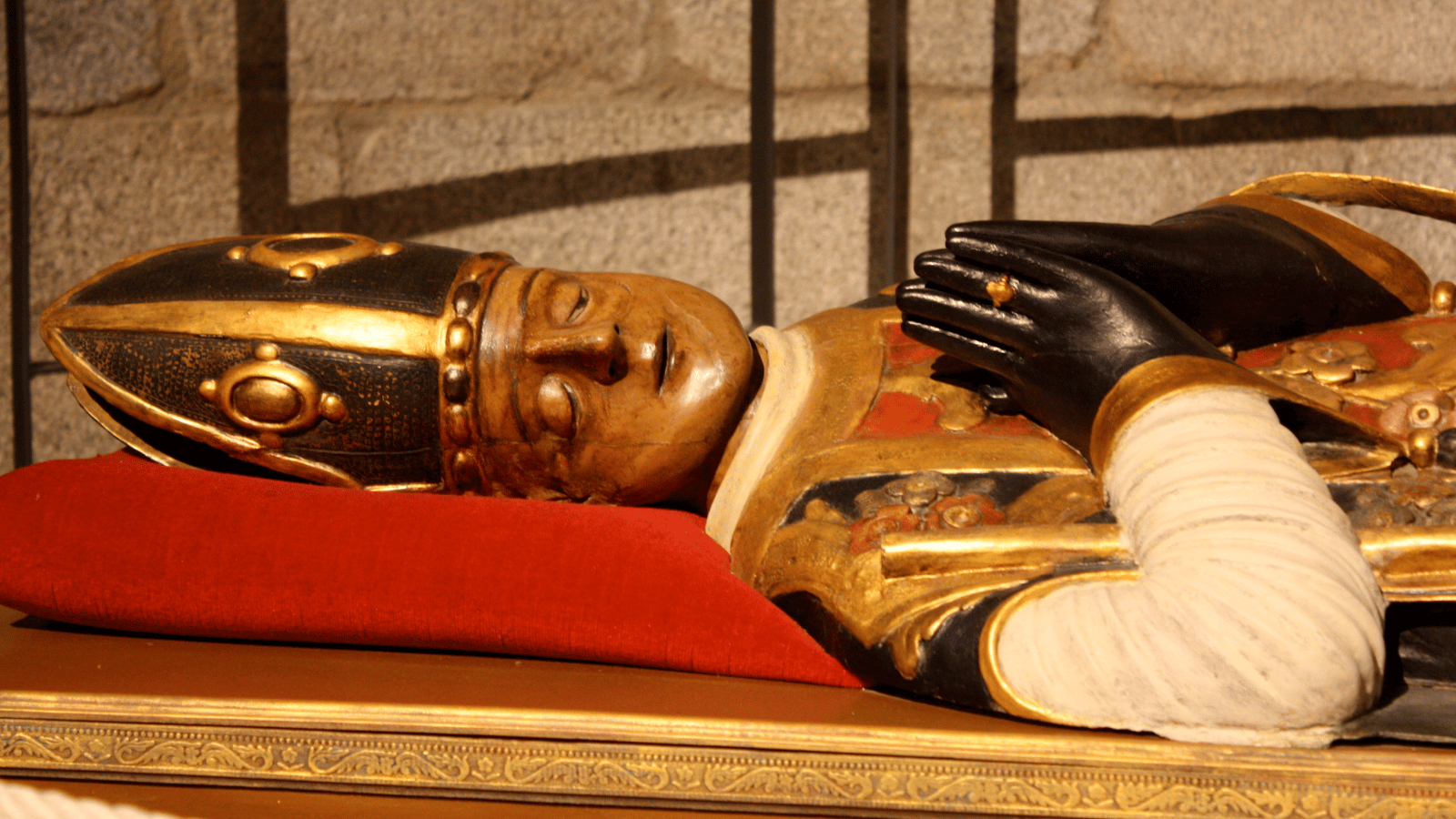
Today, November 3rd, we celebrate the feast of: Saint Martin de Porres, religious; Saint Ermengol, bishop; Saint Peter Almató, priest and martyr; and Saint Silvia of Rome.
Saint Martin de Porres, religious
Born in Lima in the year 1579, he was the son of the Spanish nobleman Juan de Porres, who served as governor of Guayaquil, and Ana Velázquez, a Black woman who had been enslaved but had obtained her freedom in Panama.Marriage between the two was unthinkable at that time, in a society where shortly before it had been debated whether Black and Indigenous peoples could be considered human. Thus, Juan lived with her and did not recognize Martin until years after his birth, although he always cared for him and ensured he never lacked food. As a youth, Martin worked in a pharmacy and a barbershop, where he was highly valued for his skill and gentleness, until he entered the Dominican convent in Lima—the order's first in all of Peru—to work as a cleaner. Nine years later, in 1603, he was admitted as a coadjutor brother.
Martin stood out for his humility and, above all, for his dedication to the poor and the sick, whom he cared for without distinction of origin or status. His figure became a symbol of charity and fraternity in a profoundly unequal society.Popularly known as "Fray Escoba" (Brother Broom) due to the broom with which he is habitually depicted—a symbol of his spirit of service—he was also credited with numerous healings and other extraordinary occurrences. Among the best-known traditions is that of the mice, which, according to legend, Martin persuaded to leave the sacristy and move to the stable, where he fed them himself.
His figure embodies the three cultures that shaped Latin America: Indigenous, Spanish, and African. He died on November 3, 1639, and was canonized in 1962. He is usually depicted with a basket, a broom, and mice.
Saint Ermengol d’Urgell, bishop
Born at the end of the 10th century, he was the son of the Viscount of Conflent and nephew of Bishop Sal·la of Urgell,whom he succeeded in the episcopal see in the year 1010. During the twenty-five years of his episcopate, he worked tirelessly for the material and spiritual renewal of the diocese. He promoted the reconstruction of the Cathedral of Saint Mary and the renovation of other churches, fostered canonical life, and favored the improvement of roads and communications throughout the territory. He also intervened in the repopulation of lands incorporated into the diocese and showed special concern for the poor and the Christian life of his faithful. He died in the year 1035 as a result of a fall while inspecting the construction of the Bar Bridge over the Segre River. He is the patron saint of the Diocese of Urgell.
Saint Pere Almató, priest and martyr
Born in Sant Feliu Sasserra, in Lluçanès, in the year 1830, he studied at the Seminary of Vic and entered the Order of Preachers with the desire to dedicate himself to preaching and the missions. He was ordained a priest in Manila, where he had arrived as a missionary, and in 1856 he moved to Tonkin, in northern present-day Vietnam, to continue evangelization amidst fierce persecution against Christians. In 1861, he was arrested and beheaded in Hải Dương, Tonkin, on account of his faith. He died at thirty-one years of age, alongside other missionaries, including the Dominicans Jerónimo Hermosilla and Valentín Berrio-Ochoa. They were beatified in 1906 and canonized in 1988, along with the other Martyrs of Vietnam.
Saint Silvia of Rome
She lived in Rome during the 6th century and is known above all for being the mother of Pope Saint Gregory the Great.Historical details about her life are sparse, but her son speaks of her in his writings, highlighting her piety and life of prayer. After being widowed, she devoted herself particularly to contemplation and works of charity in a Roman villa that would later be transformed into a monastery.
Array
(
    [ID] => 62
    [actiu] => 1
    [fecha] => 1793660400
    [cicle] => -
    [titol] => Saint Martin de Porres, Saint Ermengol d’Urgell, Saint Sant Pere Almató and Saint Silvia of Rome
    [entradeta] =>
    [cos] => Today, November 3rd, we celebrate the feast of: Saint Martin de Porres, religious; Saint Ermengol, bishop; Saint Peter Almató, priest and martyr; and Saint Silvia of Rome.


Saint Martin de Porres, religious


Born in Lima in the year 1579, he was the son of the Spanish nobleman Juan de Porres, who served as governor of Guayaquil, and Ana Velázquez, a Black woman who had been enslaved but had obtained her freedom in Panama.Marriage between the two was unthinkable at that time, in a society where shortly before it had been debated whether Black and Indigenous peoples could be considered human. Thus, Juan lived with her and did not recognize Martin until years after his birth, although he always cared for him and ensured he never lacked food. As a youth, Martin worked in a pharmacy and a barbershop, where he was highly valued for his skill and gentleness, until he entered the Dominican convent in Lima—the order's first in all of Peru—to work as a cleaner. Nine years later, in 1603, he was admitted as a coadjutor brother.


Martin stood out for his humility and, above all, for his dedication to the poor and the sick, whom he cared for without distinction of origin or status. His figure became a symbol of charity and fraternity in a profoundly unequal society.Popularly known as "Fray Escoba" (Brother Broom) due to the broom with which he is habitually depicted—a symbol of his spirit of service—he was also credited with numerous healings and other extraordinary occurrences. Among the best-known traditions is that of the mice, which, according to legend, Martin persuaded to leave the sacristy and move to the stable, where he fed them himself.


His figure embodies the three cultures that shaped Latin America: Indigenous, Spanish, and African. He died on November 3, 1639, and was canonized in 1962. He is usually depicted with a basket, a broom, and mice.


Saint Ermengol d’Urgell, bishop


Born at the end of the 10th century, he was the son of the Viscount of Conflent and nephew of Bishop Sal·la of Urgell,whom he succeeded in the episcopal see in the year 1010. During the twenty-five years of his episcopate, he worked tirelessly for the material and spiritual renewal of the diocese. He promoted the reconstruction of the Cathedral of Saint Mary and the renovation of other churches, fostered canonical life, and favored the improvement of roads and communications throughout the territory. He also intervened in the repopulation of lands incorporated into the diocese and showed special concern for the poor and the Christian life of his faithful. He died in the year 1035 as a result of a fall while inspecting the construction of the Bar Bridge over the Segre River. He is the patron saint of the Diocese of Urgell.


Saint Pere Almató, priest and martyr


Born in Sant Feliu Sasserra, in Lluçanès, in the year 1830, he studied at the Seminary of Vic and entered the Order of Preachers with the desire to dedicate himself to preaching and the missions. He was ordained a priest in Manila, where he had arrived as a missionary, and in 1856 he moved to Tonkin, in northern present-day Vietnam, to continue evangelization amidst fierce persecution against Christians. In 1861, he was arrested and beheaded in Hải Dương, Tonkin, on account of his faith. He died at thirty-one years of age, alongside other missionaries, including the Dominicans Jerónimo Hermosilla and Valentín Berrio-Ochoa. They were beatified in 1906 and canonized in 1988, along with the other Martyrs of Vietnam.


Saint Silvia of Rome


She lived in Rome during the 6th century and is known above all for being the mother of Pope Saint Gregory the Great.Historical details about her life are sparse, but her son speaks of her in his writings, highlighting her piety and life of prayer. After being widowed, she devoted herself particularly to contemplation and works of charity in a Roman villa that would later be transformed into a monastery.
    [imatge] => https://montserrat.sobrevia.net/gestiobeta/arxius/montserrat/santoral/abadiacat_1460.jpg
)