




25 October 2026
Saint Bernard Calbó, Saints Fructus, Valentine, and Engratia and Our Lady of El Collell
Today, October 25th, we celebrate the feast of:
Saint Bernard Calbó, Abbot and Bishop; Saints Fructus, Valentine, and Engratia, Martyrs; and Our Lady of El Collell
Saint Bernard Calbó, Abbot and Bishop
He was born near Reus around 1180. He studied law and worked as a jurist and official in the chancery of the Archdiocese of Tarragona. Following a severe illness, he decided to leave his professional life and joined the Cistercian monastery of Santes Creus as a monk, eventually being elected abbot, a position from which he promoted communal life and the reform of other religious institutions. In 1233, he was elected Bishop of Vic. During his episcopate, he labored for the proper organization of the diocese, the discipline of the clergy, and the pastoral care of the faithful. He also accompanied King James I in the conquest of Valencia in 1238 and took part in the political and ecclesial structure of the new kingdom. He died in 1243 in odor of sanctity. His veneration was confirmed by the Holy See in 1710.
Saints Fructus, Valentine, and Engratia, Martyrs
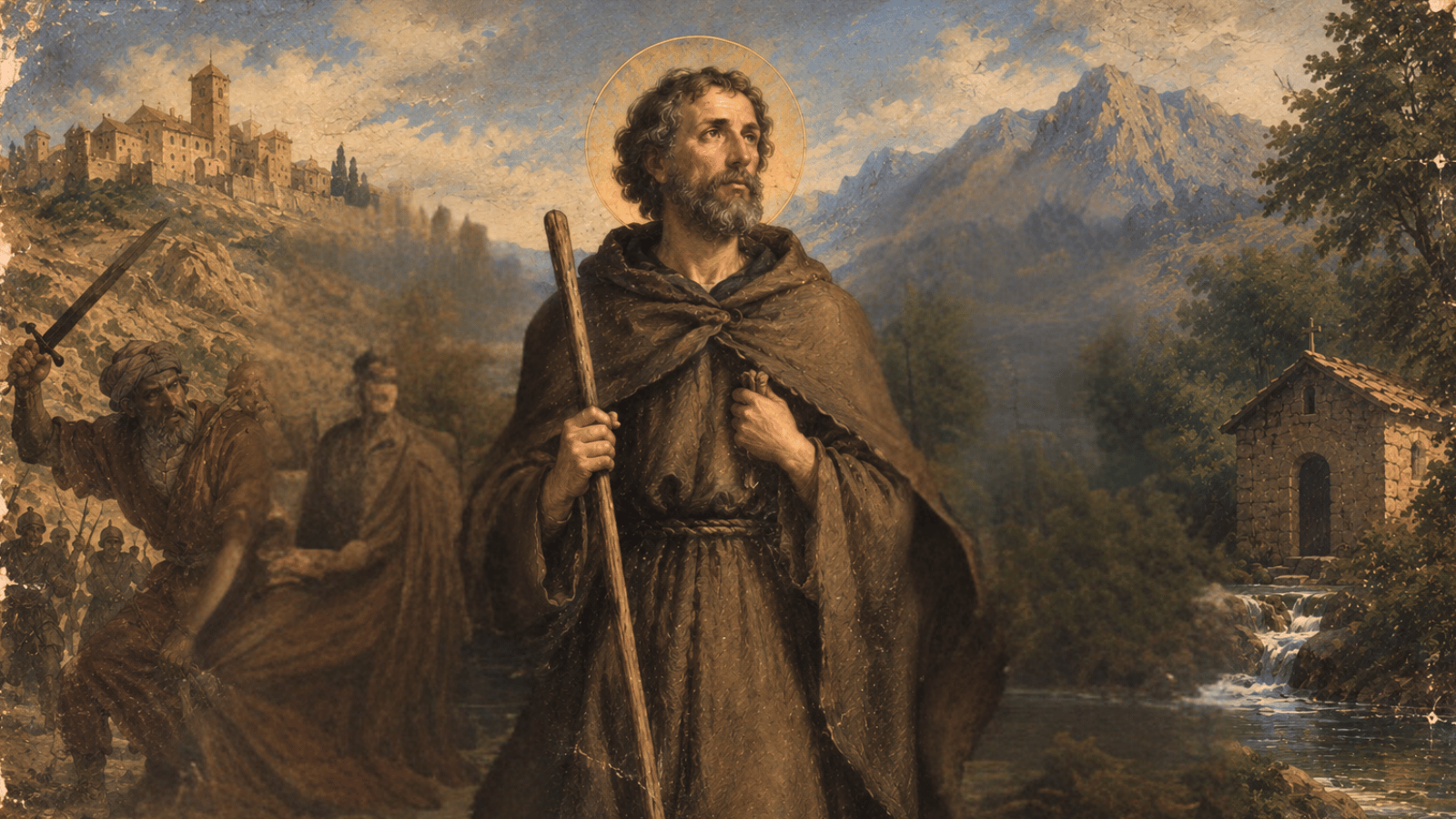
Regarding Fructus, tradition holds that he was born into a prominent family of Segovia in the second half of the 7th century. He distributed all his wealth among the poor and spent the rest of his life as a hermit near the Duratón River, accompanied by his siblings, Valentine and Engratia. The lands where he lived served as a haven during the Muslim invasion, in which his brother and sister suffered martyrdom. Fructus died shortly thereafter, around the year 715.
Our Lady of El Collell
In El Collell, in the Garrotxa region, a hermitage stood from ancient times, and by the 12th century, it housed a clerical community and an inter-parish confraternity. In 1483, according to tradition, the sanctuary experienced a resurgence following an apparition of the Blessed Virgin Mary to Miquel Noguer, a resident of El Torn. Since then, the site became an important center of Marian devotion in the Diocese of Girona. In 1952, the current church, inspired by Romanesque architecture, was consecrated. The following year, the 13th-century statue of Our Lady was restored, crowned, and proclaimed patroness of the diocesan clergy of Girona.
Array
(
    [ID] => 53
    [actiu] => 1
    [fecha] => 1792879200
    [cicle] => -
    [titol] => Saint Bernard Calbó, Saints Fructus, Valentine, and Engratia and Our Lady of El Collell
    [entradeta] =>
    [cos] => Today, October 25th, we celebrate the feast of:


Saint Bernard Calbó, Abbot and Bishop; Saints Fructus, Valentine, and Engratia, Martyrs; and Our Lady of El Collell


Saint Bernard Calbó, Abbot and Bishop


He was born near Reus around 1180. He studied law and worked as a jurist and official in the chancery of the Archdiocese of Tarragona. Following a severe illness, he decided to leave his professional life and joined the Cistercian monastery of Santes Creus as a monk, eventually being elected abbot, a position from which he promoted communal life and the reform of other religious institutions. In 1233, he was elected Bishop of Vic. During his episcopate, he labored for the proper organization of the diocese, the discipline of the clergy, and the pastoral care of the faithful. He also accompanied King James I in the conquest of Valencia in 1238 and took part in the political and ecclesial structure of the new kingdom. He died in 1243 in odor of sanctity. His veneration was confirmed by the Holy See in 1710.


Saints Fructus, Valentine, and Engratia, Martyrs


Regarding Fructus, tradition holds that he was born into a prominent family of Segovia in the second half of the 7th century. He distributed all his wealth among the poor and spent the rest of his life as a hermit near the Duratón River, accompanied by his siblings, Valentine and Engratia. The lands where he lived served as a haven during the Muslim invasion, in which his brother and sister suffered martyrdom. Fructus died shortly thereafter, around the year 715.


Our Lady of El Collell


In El Collell, in the Garrotxa region, a hermitage stood from ancient times, and by the 12th century, it housed a clerical community and an inter-parish confraternity. In 1483, according to tradition, the sanctuary experienced a resurgence following an apparition of the Blessed Virgin Mary to Miquel Noguer, a resident of El Torn. Since then, the site became an important center of Marian devotion in the Diocese of Girona. In 1952, the current church, inspired by Romanesque architecture, was consecrated. The following year, the 13th-century statue of Our Lady was restored, crowned, and proclaimed patroness of the diocesan clergy of Girona.
    [imatge] => https://montserrat.sobrevia.net/gestiobeta/arxius/montserrat/santoral/abadiaeng_53.jpg
)