




3 October 2026
Saint Francis Borgia, Saint Gerard, Saint Dionysius the Areopagite and Saint Virila of Leyre
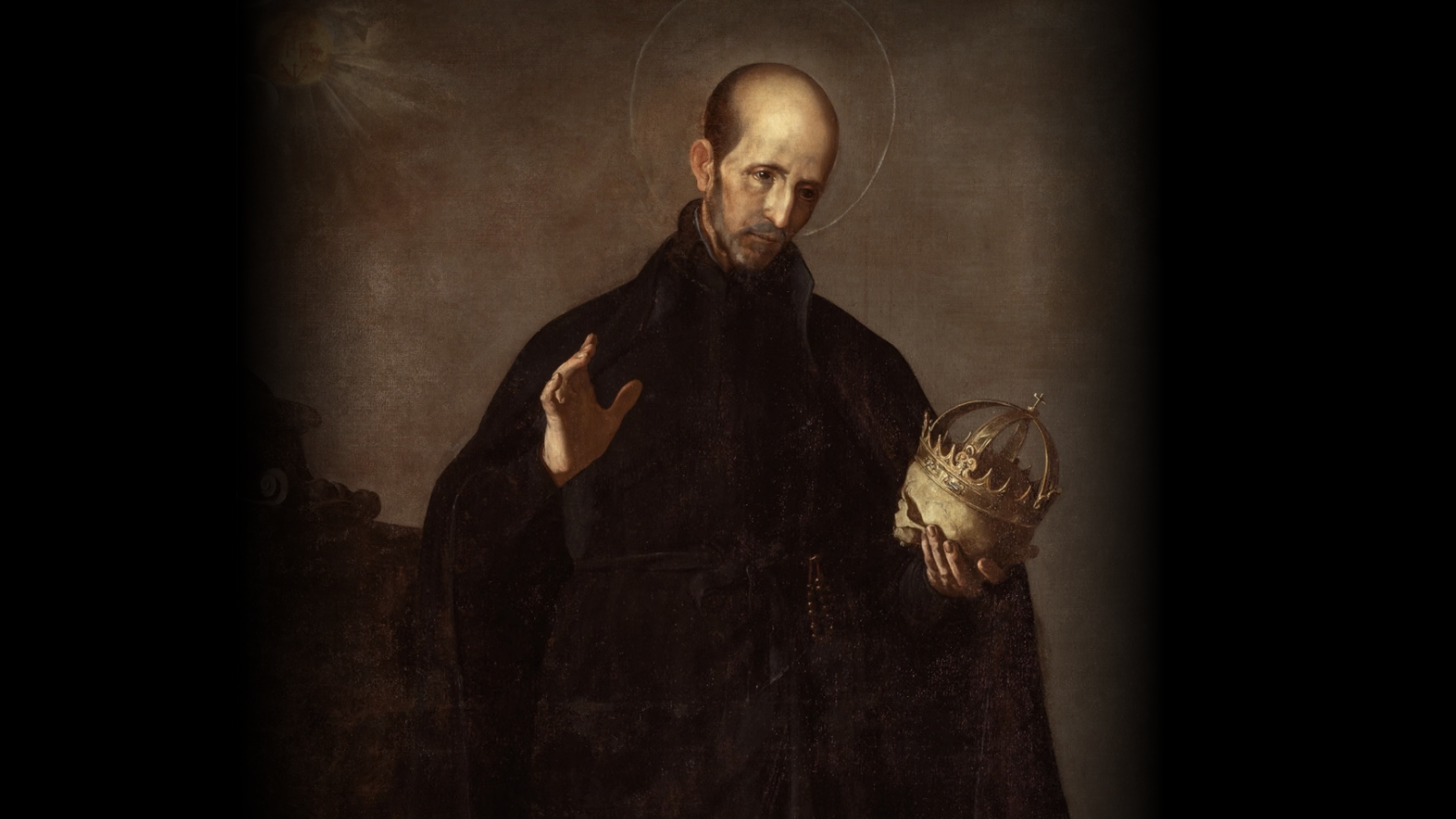
Today, October 3rd, we celebrate the feast day of Saint Francis Borgia, priest; Saint Gerard, priest; Saint Dionysius the Areopagite, bishop; and Saint Virila of Leyre, abbot.
Saint Francis Borgia, priest
Of the Borgia family, he was born in Gandia in the year 1510. He married Eleanor of Castro and had eight children. His social standing brought him to the court of Emperor Charles V and, later on, he became Viceroy of Catalonia. The death of his wife in 1546 deeply marked his life. After renouncing his titles and positions, he entered the Society of Jesus, determined to serve "a Lord who could not die." In Gandia, he had already supported the presence of the Jesuits and founded the Society's first school there.
Ordained a priest, Francis Borgia became the third Superior General of the Society of Jesus. During his term, he reorganized and consolidated the order, promoted its expansion across Europe and mission territories, and gave a major push to establishing numerous educational centers, creating the famous Ratio studiorum for them. He also advocated that Jesuit communities should not hold slaves: "Henceforth, no slaves shall be kept in our colleges, houses, and missions, even if others are permitted to do so," in an era when this practice was still tolerated. He died in Rome in 1572 and was canonized in 1671.
Saint Gerard, priest
He was born in the year 895 in a small village in present-day Belgium. During a stay in France, he came to know monastic life and decided to enter the Abbey of Saint-Denis, where he was formed as a monk and ordained a priest. Later, he founded Brogne Abbey (currently named Saint-Gérard) in modern-day Belgium, where he introduced the Rule of Saint Benedict and promoted a monastic life centered on prayer, work, and discipline. He also participated in reforming several monasteries in the region. He died in 959.
Saint Dionysius the Areopagite, bishop
Dionysius is one of the Athenians who, according to the Acts of the Apostles, converted to Christianity after hearing Saint Paul preach at the Areopagus in Athens. The biblical text mentions him among those who believed in Christ, but provides no further details about his life. Subsequent tradition presents him as the first Bishop of Athens and a martyr in one of the first major Roman persecutions against Christians.
Saint Virila of Leyre, abbot
He entered the Monastery of Leyre in Navarre at a young age, where he eventually became abbot. He is venerated as one of the great promoters of monastic life in this monastery. Tradition places him in the 10th century and remembers him for his devotion to prayer and community life. His figure remained closely tied to the Monastery of Leyre, where he is venerated as a saint.
An ancient legend tells that while walking through the woods near the monastery, meditating on the mystery of the Trinity, Virila stopped to listen to a bird's song. When he returned to Leyre, three hundred years had passed, though to him it had felt like only a few moments. As the monks gathered to pray, they sang Psalm 89, the verse reading: "A thousand years in your sight are like a day that has gone by." Then a nightingale entered the temple with a ring in its beak and placed it on Virila's finger. Virila heard the voice of God telling him: "If the song of a simple bird can captivate a man for three centuries, what will the divine light of the Savior not be capable of doing?"
Array
(
    [ID] => 31
    [actiu] => 1
    [fecha] => 1790978400
    [cicle] => -
    [titol] => Saint Francis Borgia, Saint Gerard, Saint Dionysius the Areopagite and Saint Virila of Leyre
    [entradeta] =>
    [cos] => Today, October 3rd, we celebrate the feast day of Saint Francis Borgia, priest; Saint Gerard, priest; Saint Dionysius the Areopagite, bishop; and Saint Virila of Leyre, abbot.


Saint Francis Borgia, priest


Of the Borgia family, he was born in Gandia in the year 1510. He married Eleanor of Castro and had eight children. His social standing brought him to the court of Emperor Charles V and, later on, he became Viceroy of Catalonia. The death of his wife in 1546 deeply marked his life. After renouncing his titles and positions, he entered the Society of Jesus, determined to serve "a Lord who could not die." In Gandia, he had already supported the presence of the Jesuits and founded the Society's first school there.


Ordained a priest, Francis Borgia became the third Superior General of the Society of Jesus. During his term, he reorganized and consolidated the order, promoted its expansion across Europe and mission territories, and gave a major push to establishing numerous educational centers, creating the famous Ratio studiorum for them. He also advocated that Jesuit communities should not hold slaves: "Henceforth, no slaves shall be kept in our colleges, houses, and missions, even if others are permitted to do so," in an era when this practice was still tolerated. He died in Rome in 1572 and was canonized in 1671.


Saint Gerard, priest


He was born in the year 895 in a small village in present-day Belgium. During a stay in France, he came to know monastic life and decided to enter the Abbey of Saint-Denis, where he was formed as a monk and ordained a priest. Later, he founded Brogne Abbey (currently named Saint-Gérard) in modern-day Belgium, where he introduced the Rule of Saint Benedict and promoted a monastic life centered on prayer, work, and discipline. He also participated in reforming several monasteries in the region. He died in 959.


Saint Dionysius the Areopagite, bishop


Dionysius is one of the Athenians who, according to the Acts of the Apostles, converted to Christianity after hearing Saint Paul preach at the Areopagus in Athens. The biblical text mentions him among those who believed in Christ, but provides no further details about his life. Subsequent tradition presents him as the first Bishop of Athens and a martyr in one of the first major Roman persecutions against Christians.


Saint Virila of Leyre, abbot


He entered the Monastery of Leyre in Navarre at a young age, where he eventually became abbot. He is venerated as one of the great promoters of monastic life in this monastery. Tradition places him in the 10th century and remembers him for his devotion to prayer and community life. His figure remained closely tied to the Monastery of Leyre, where he is venerated as a saint.


An ancient legend tells that while walking through the woods near the monastery, meditating on the mystery of the Trinity, Virila stopped to listen to a bird's song. When he returned to Leyre, three hundred years had passed, though to him it had felt like only a few moments. As the monks gathered to pray, they sang Psalm 89, the verse reading: "A thousand years in your sight are like a day that has gone by." Then a nightingale entered the temple with a ring in its beak and placed it on Virila's finger. Virila heard the voice of God telling him: "If the song of a simple bird can captivate a man for three centuries, what will the divine light of the Savior not be capable of doing?"
    [imatge] => https://montserrat.sobrevia.net/gestiobeta/arxius/montserrat/santoral/abadiaeng_31.jpg
)