




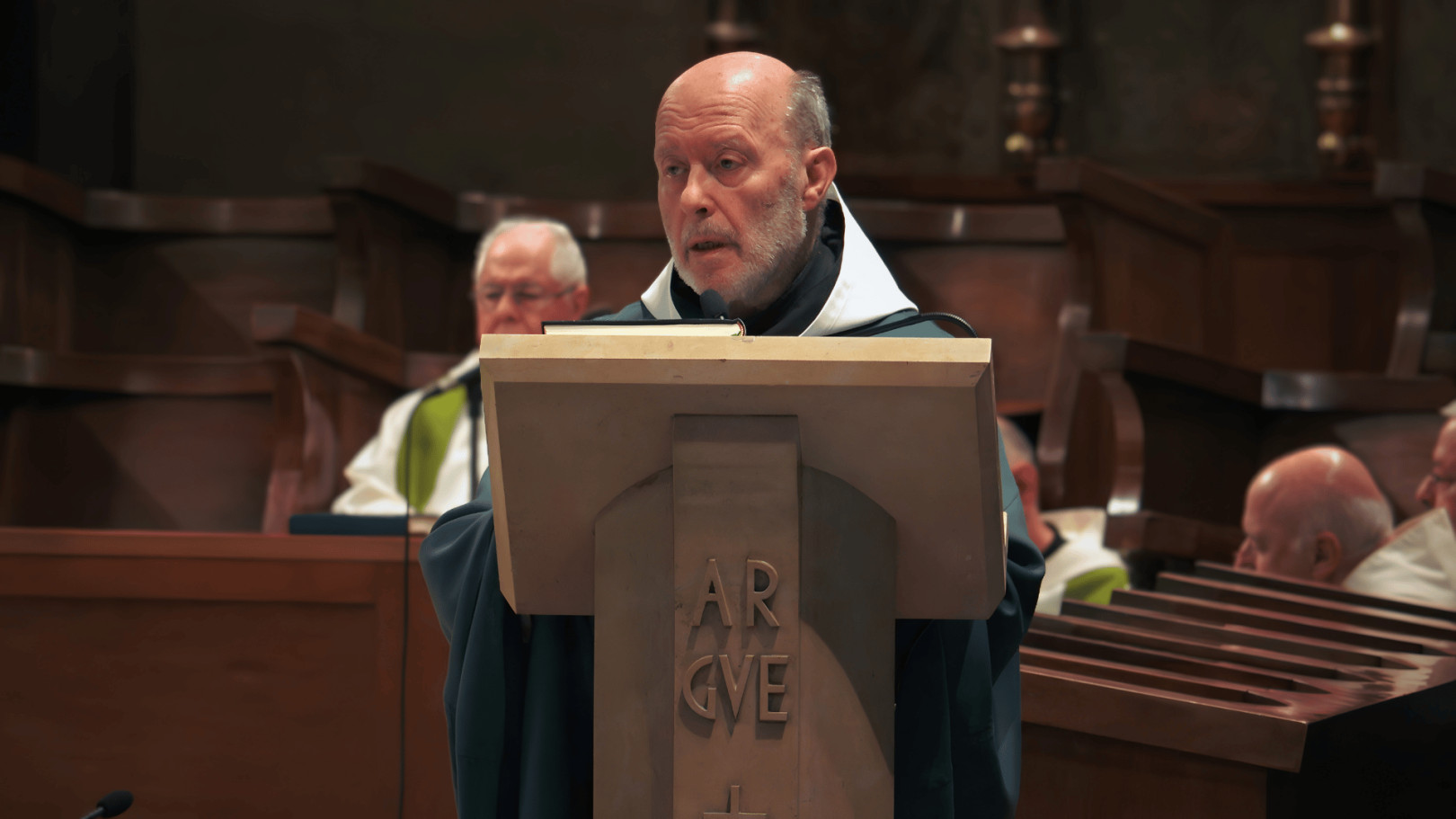
Homily by Fr. Lluís Planas, monk of Montserrat (October 4, 2026)
27th Sunday in Ordinary Time (Cycle A)
5 October de 2026
Isaiah 5:1-7 | Philippians 4:6-9 | Matthew 21:33-43
Every Sunday the Church presents us with a passage from the Gospel to help us reflect on our own spiritual journey and that of the community of believers. Today's Gospel is situated in the final chapters of the Gospel of Saint Matthew, where we see Jesus illustrating, through parables and teachings, the attitudes required to welcome the Kingdom of God. It is an assessment of the path taken by the primary leaders of the people; and today, through this parable, we can see Jesus' own experience anticipating the end of His life.
Jesus addresses the chief priests and the elders of the people—in other words, the leaders whose decisions shape everyone’s lives. The parable describes a meticulously protected vineyard, telling us that he "put a wall around it, dug a winepress in it and built a watchtower." In the first reading, we are told the meaning of the vineyard: "The vineyard of the Lord Almighty is the house of Israel." We have repeated this in the responsorial psalm. Isaiah reveals who the true owner of the people is when he adds: "He looked for justice, but saw bloodshed; for righteousness, but heard cries of distress."
In this parable, Jesus draws inspiration from the allegory we heard in the first reading. As we listened to it unfold, we saw how time and again the tenants failed to fulfill their duty of making the vineyard yield fruit for the owner who placed them in charge. Instead, they pursued their own personal interests. They eliminated everyone the owner sent to ask for an accounting of their management, right up until the owner's son. We understand that those sent to demand an accounting represent the prophets who denounced the unjust situations created by the rulers of that time. Finally, "the owner's son" refers to Jesus Himself. I would like to emphasize that when plotting against the owner's son, the tenants said: "Let's kill him and take his inheritance."
Today we see many political situations where, in order to seize the wealth of others, there are not only death threats, but unfortunately also so-called hybrid wars that lead to destruction, starvation, injustice, and death. Like the tenants, they do not hesitate to destroy and kill. This parable should also serve as a warning to us against letting ourselves be driven by possessive attitudes. We all carry responsibilities: some at a modest level, others at a higher level, and others at a very high level. What matters for everyone is the attitude we adopt toward the responsibilities entrusted to us. The temptation we face is always the same: adopting a possessive mindset, saying: "God has given me gifts; I am their owner and I can do whatever I want with them. I hold a position of authority; I will exploit this situation for my own benefit, forgetting that authority must be exercised for the good of all."
A possessive attitude lies at the root of countless injustices. Through it we hope to find happiness, but in reality, that never happens. True happiness is found only in a life of love and service to others. All the gifts and talents God bestows upon us are instruments meant for loving and serving our neighbor. If we exercise authority selfishly, we become like the tenants in the parable: we will have eliminated and killed Christ in our lives, even if we call ourselves Christians. Our actions will speak for themselves.
As Christians, we are called to live generously, in a spirit of love and service. Let us take stock of our fruits.
Tags
General Now on home page
5 october de 2026
16 july de 2026
5 october de 2026
El més llegit