




Abadia de Montserrat
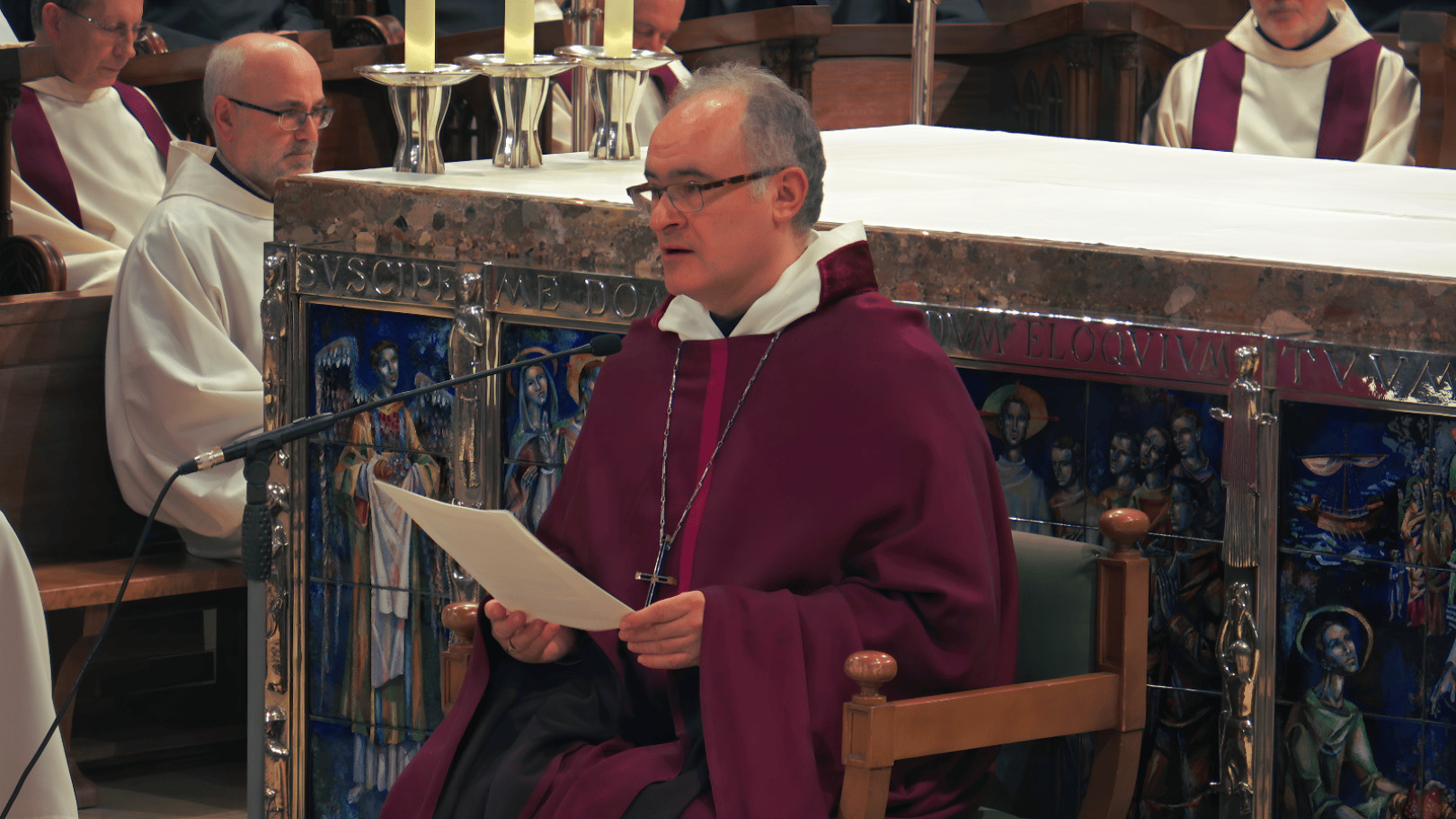
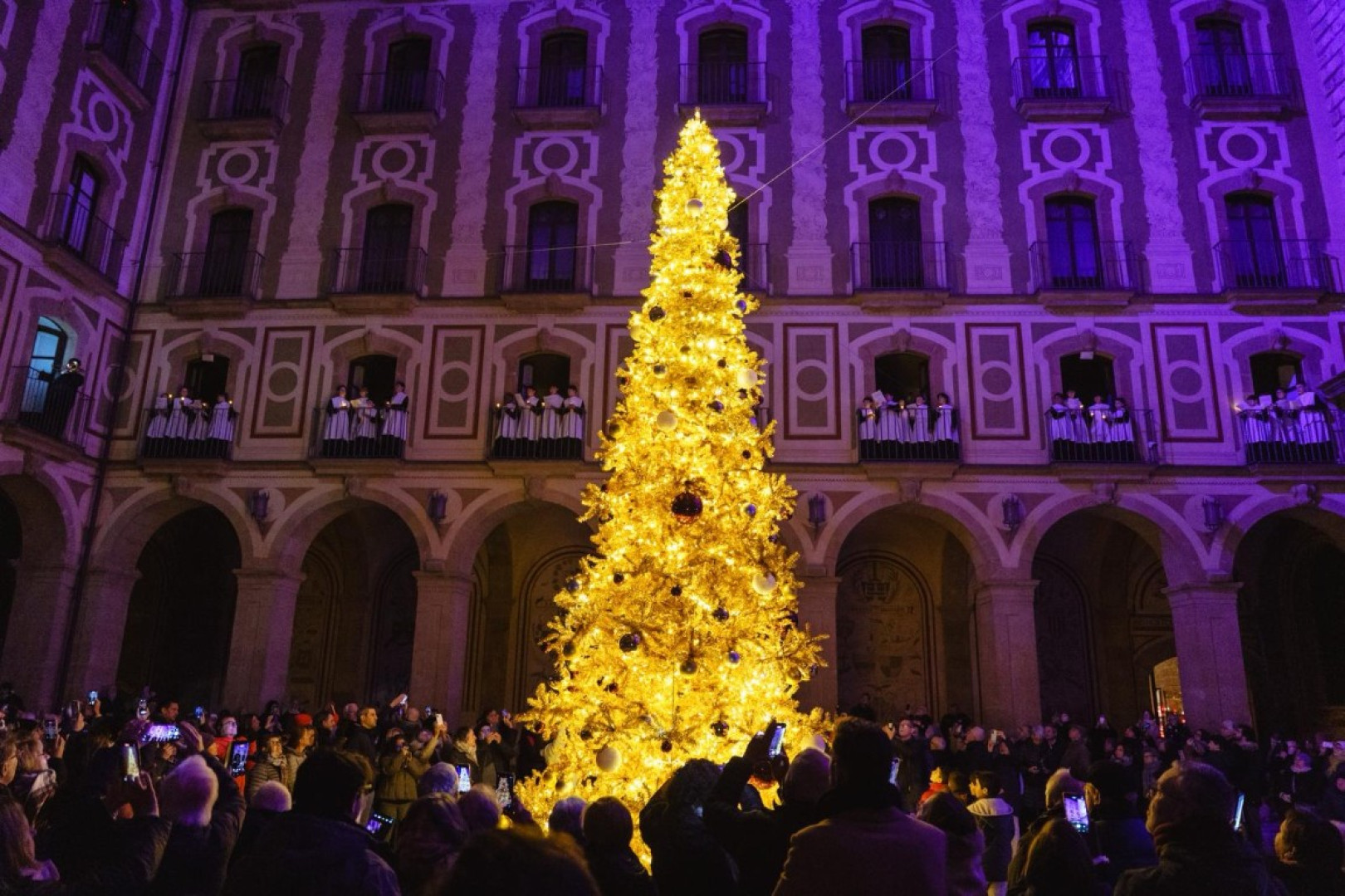
Montserrat prepares for the arrival of Advent and invites everyone to the Christmas lights switch‑on
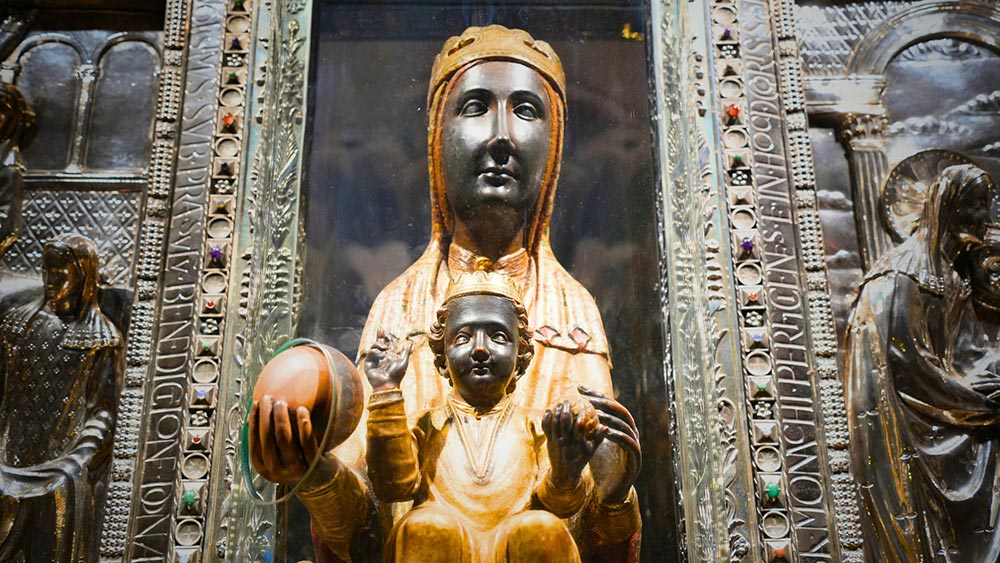
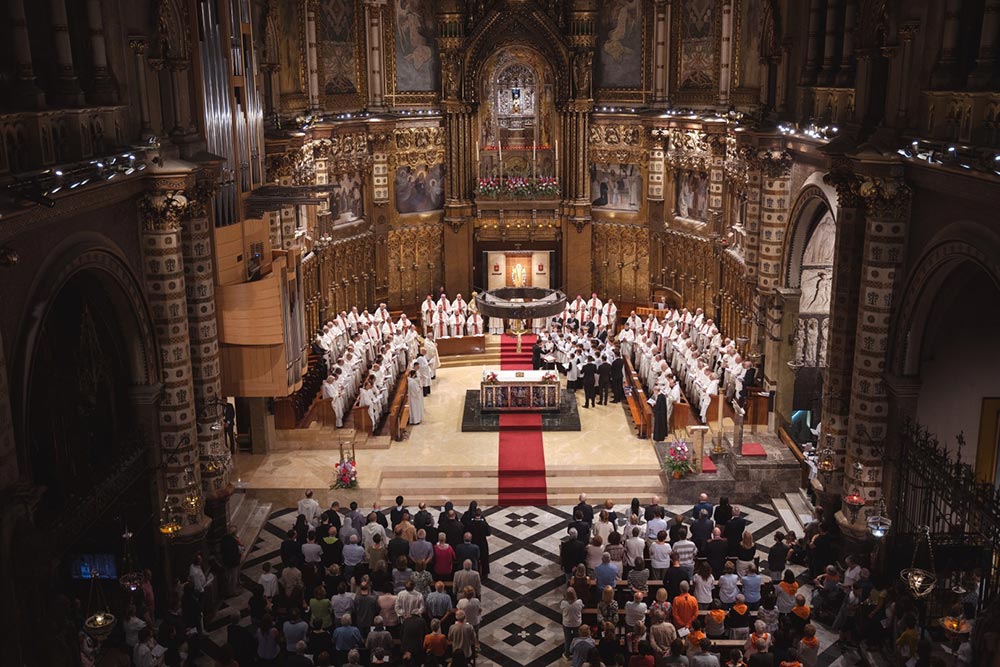

Lord, you have revealed your help, and we all wish to contemplate your saving action.
Saint Catherine of Alexandria, virgin and martyr
According to an ancient tradition, she was a young Christian philosopher in 4th-century Alexandria who stood out for her intelligence and philosophical training, resolutely refuting the objections of other philosophers who opposed the faith.According to tradition, she died a martyr by refusing to abjure the Christian faith during the reign of Emperor Maximinus.Legend tells that she was condemned to die on a wheel fitted with sharp blades, yet it miraculously broke apart, killing her executioners. She was finally beheaded, and her remains were taken to Sinai.
Her popularity spread rapidly throughout Western Europe from the 10th century onward; medieval universities adopted her as patroness of students and philosophers, which further strengthened her presence in the cultural and educational spheres. Her symbolic image, with the wheel, the sword, and the crown, became very prominent in European Gothic and Renaissance art. Her veneration remains alive, with an important focal point at the monastery bearing her name at the foot of Mount Sinai.
Saint Peter of Alexandria, bishop and martyr
He was born in the 3rd century and was ordained Bishop and Patriarch of Alexandria. A few years after occupying the see of Alexandria, the persecutions of Diocletian began, continued by his successors. Peter had to go into hiding, moving from place to place. He traveled through Mesopotamia, Phoenicia, Palestine, and various islands. He was imprisoned,probably under Maximian II, though he was eventually released. According to tradition, in the year 311 he was arrested once more and beheaded in Alexandria, shortly before the persecution of Christians came to an end.
He was a great defender of the unity of the faith and Christian doctrine, especially against Arianism, insisting on the importance of reason and apostolic tradition in understanding Scripture and the Christian faith. This established a model of episcopal leadership grounded in doctrinal and pastoral authority.
Blessed Beatrice of Ornacieux, religious
She was born around the year 1260 in Ornacieux, in the Dauphiné region, not far from the Grande Chartreuse, founded by Saint Bruno. When she was about thirteen years old, moved by an inner call, she entered the women's charterhouse of Parménie, where she manifested a great devotion to the Passion of Our Lord. One of the pillars of her spiritual life was to feel all the sorrows of the Passion as her own. In 1301, when the Blessed's piety was already widely known, the Order sent her together with other sisters of the community to found a new charterhouse in the neighboring town of Eymeux. In this new house, which gradually grew, Beatrice continued to lead a life of extreme poverty dedicated to life in Christ. She rested in the peace of the Lord around the year 1303. Her beatification dates to 1869, and she is the only beatified Carthusian nun. The cross and the nail are her principal iconographic attributes.
Blesseds Luigi and Maria Beltrame Quattrocchi, married couple
On November 25, 1905, they were married and knew how to walk together as a family toward holiness. For the first time in history, in 2001, a married couple was beatified together. Theirs was an ordinary life lived in an extraordinary way.Their daily life as spouses and parents of four children was always sustained by prayer, fidelity to the Gospel, and intimate union with Jesus in the Eucharist. They had the custom of praying together each evening, turning their dining room into a sort of small family chapel, and whenever one of the children faced a difficulty, the others would spontaneously leave a small note with a written prayer. In their social commitment, they also expressed their deep life of faith and concrete charity toward the sick and needy by volunteering as a stretcher-bearer and a nurse.
Calendar
Lorem ipsum dolor sit amet consectetur adipiscing elit. Quisque faucibus ex sapien vitae pellentesque sem placerat.
Schedule
Lorem ipsum dolor sit amet consectetur adipiscing elit. Quisque faucibus ex sapien vitae pellentesque sem placerat.
Offerings
Lorem ipsum dolor sit amet consectetur adipiscing elit. Quisque faucibus ex sapien vitae pellentesque sem placerat.
News
Segueix les novetats i les notícies més destacades de l’Abadia de Montserrat: comunitat, cultura, opinió, l’Escolania de Montserrat i el contingut de l’actualitat més montserratina!
Bookings
Lorem ipsum dolor sit amet consectetur adipiscing elit. Quisque faucibus ex sapien vitae pellentesque sem placerat.
The Benedictine values of Montserrat
The motto Ora, Lege, Labora, Rege te ipsum, In Communitate can be read starting from its foundation to unravel the values it contains, all the way to reaching the summit, which is none other than God.
Prayer
Prayer is the center of the monks' daily routine. Through the Divine Office and the conventual Mass, the community comes together to encounter God and one another. We pray to remember that life is greater than ourselves and to find meaning in what we do.